Contactar

Pressure Vessel Design: 304L Grade Stainless Steel Plate Selection

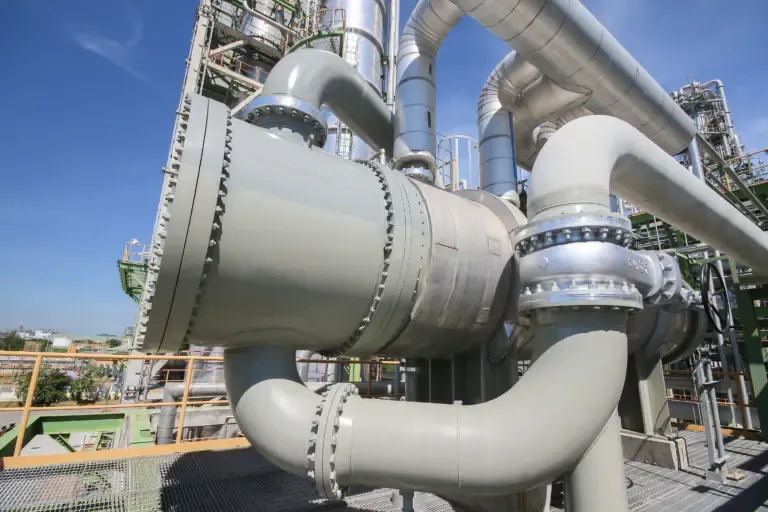
Pressure vessel – Courtesy of GRIRO Romania

ASME codes (American Society of Mechanical Engineers) regulates boilers and pressure vessels design, development and construction in a wide range of industries worldwide.

When selecting materials, in some cases such as the following, ASME II Part D can provide different mechanical properties for the same type of material. For example, for 304L grade stainless steel plate, ASME II Part D provides two rows of stress properties to identify SA-240 304L stainless steel in low and high strength. The difference between the two is that one of these materials (the one identified with G5 note*) has better mechanical properties than its counterpart.

Tabla-304L

*G5 note indicates that allowable strength of the material is set above the customary 66% yield point.

The main benefit of using G5 stainless steel in the design of components under pressure is that it requires less material thickness than the stainless steel without G5 note. For the same and particular design conditions (pressure and temperature), using the two materials indicated in the previous table, there would be a difference of 12 mm in the wall thickness required in the  pressure calculation of the internal pressure of a shell ring.

g5-seleccion-de-material
Thinckness obtained WITH G5 note.
without-g5-seleccion-de-material
Thinckness obtained WITHOUT G5 note.

However, ASME II Part D advises against using materials identified with Note G5 for the design of body flanges to be used in bolted joints or other applications where small amounts of distortion may cause leaks or malfunctioning.

Experience

CADE counts on widespread experience in the design of pressure vessels and heat exchangers according to ASME, API and TEMA, among other recognized design codes within oil&power and process industries worldwide. The company serves end users and manufacturing companies providing comprehensive engineering and consulting services: process, thermal, hydraulic and mechanical design, design specifications and requisitions, procurement technical advisory, owner’s engineering, performance evaluation, integrity assessment or expert witness advisory, among other CADE’s capabilities

Picture of Alberto Arias Rosa

Alberto Arias Rosa

Análisis estructural de plantas fotovoltaicas: estructura de un seguidor solar vista desde debajo de los módulos

Design, validation and structural analysis of photovoltaic plants

Wind, connections, foundations and assembly: where the structural risks of a photovoltaic plant arise and how to address them in design, during construction and after a failure in operation.
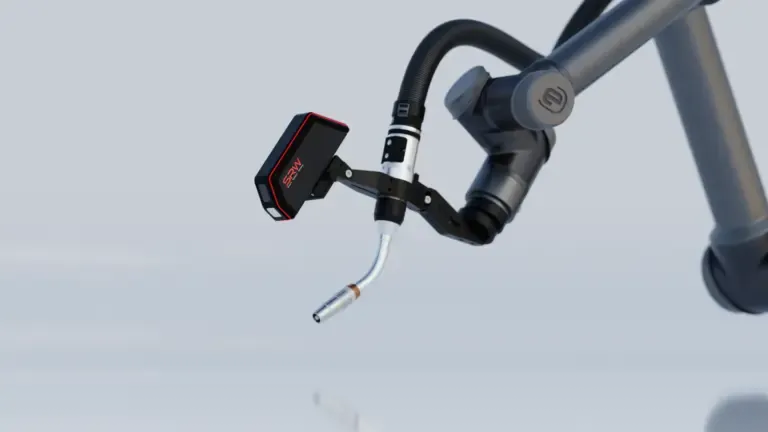
intelligent robotic welding

CADE SRW: intelligent robotic welding that adapts to the real part

CADE SRW is an intelligent robotic welding solution that recognises the joint, interprets the real part and adjusts the process as it welds.
Flanged Joint Leak Tightness Analysis: Calculation and FEA