Aeroelastic Design of Large-Scale Solar PV Systems: Prevention Through Innovation
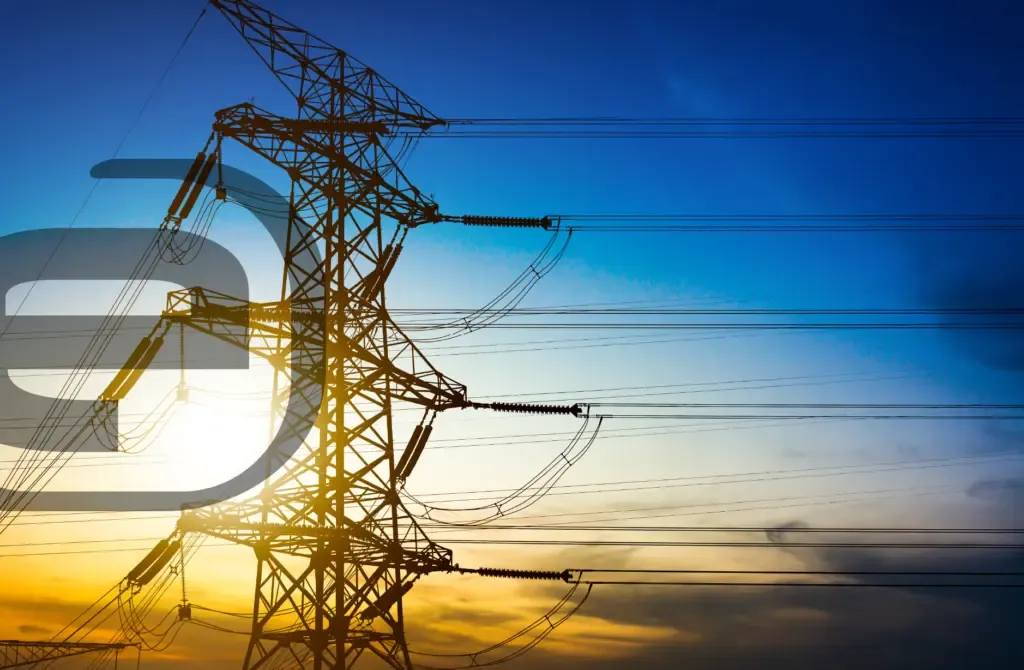
In recent years, the solar photovoltaic sector has followed a clear trend toward lightweight supporting structures to reduce costs and improve competitiveness. However, this approach, combined with new regulatory and site conditions, has increased the importance of aeroelasticity in photovoltaic installations as a critical factor for plant safety and lifespan
Aeroelasticity in Photovoltaic Installations and Wind in PV Structures
Aeroelasticity results from the interaction between wind, the supporting structure, and the dynamic behavior of PV panels. Under strong or turbulent wind conditions, this interaction can cause vibrations, resonances, and deformations that directly affect the structural performance of PV systems.
Structural Risks in High-Wind PV Installations
The combination of increasingly lighter structures and high-wind locations makes many solar plants especially sensitive to aeroelastic effects.
Key risks include:
- Dynamic resonances induced by wind
- Overstressing of critical components
- Panel misalignments
- Premature structural fatigue of supports and anchors
- Development of microcracks that shorten equipment lifespan
In extreme cases, these phenomena can lead to catastrophic structural failures, compromising the solar plant’s safety.
Hybrid Solar-Wind Projects: New Wind Scenarios.
In countries like Spain, public administrations are promoting renewable technology hybridization, encouraging projects that combine solar PV and wind energy. This often means installing PV panels in existing wind farms or sites originally designed for wind turbines.
These environments present higher wind intensity and variability, forcing a reconsideration of traditional design criteria for PV structures.
AnemioT: The Solution Against Aeroelasticity in PV Plants
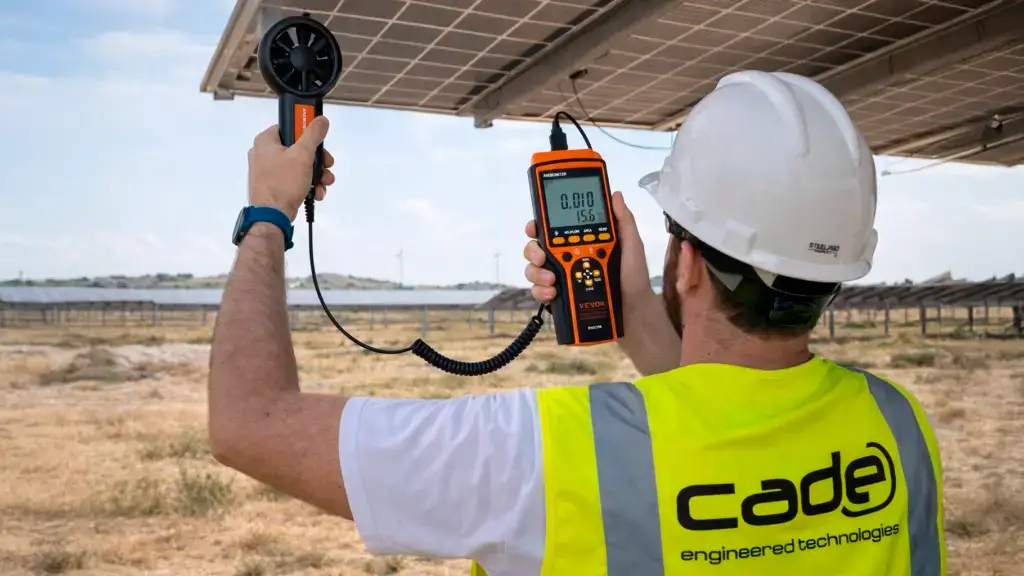
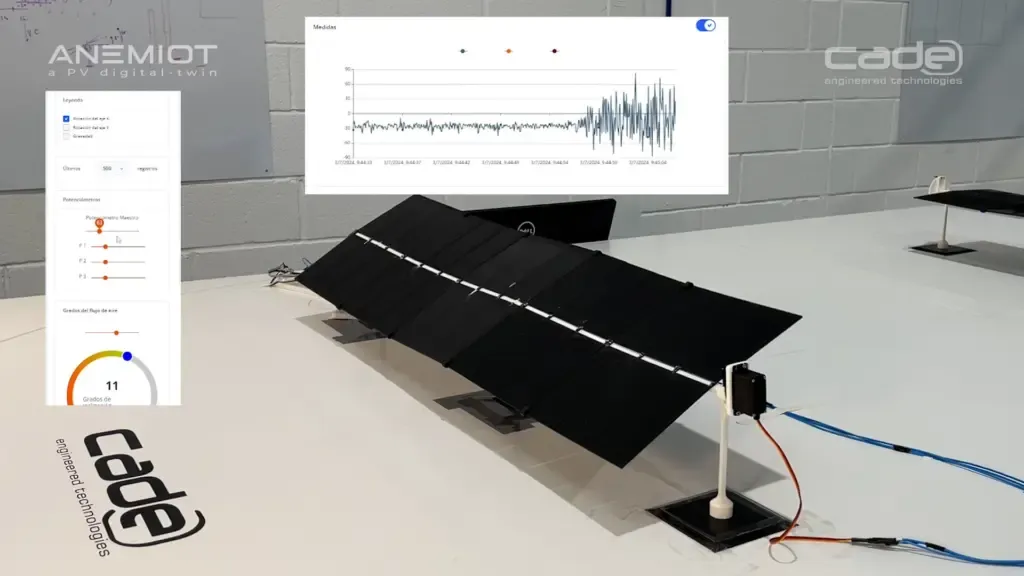
To address these challenges, CADE Soluciones has developed AnemioT, a technology specifically designed to prevent and mitigate aeroelastic effects in PV installations, both during construction and operation.
Real-Time Sensing and Active Structural Control
AnemioT is installed at key points in the solar trackers and operates through real-time sensors, continuously analyzing:
Incoming wind flow
The structural condition of PV structures
Based on this analysis, the system acts preventively to avoid resonances, overstressing, misalignments, and microcracks, helping to extend equipment lifespan and maximize overall energy production.
Longer Lifespan and Structural Safety for PV Installations
Thanks to AnemioT, it is possible to ensure the target lifespan of PV plants, even in sites with demanding wind conditions.
Extreme Event Logging and Technical Audits
AnemioT also records all extreme wind events and structural behavior, creating a historical dataset essential for:
• Technical and structural audits
• Plant condition assessments
• Future decision-making in O&M
CADE Soluciones’ Expertise in Structural Analysis, CWE and WTT
Throughout its trajectory, CADE Soluciones has built deep expertise in the advanced analysis of structures subjected to complex loading conditions, particularly in demanding wind environments. Its approach integrates FEM, CFD, and Wind Tunnel Testing as complementary tools rather than isolated techniques, enabling a comprehensive understanding of structural and aerodynamic behavior.
The use of the Finite Element Method (FEM) allows CADE to model the structural response of photovoltaic systems with a high level of detail, assessing stresses, deformations, fatigue, and nonlinear effects. This capability is essential for optimizing designs, reducing material usage without compromising safety, and anticipating potential failure modes before construction.
Computational Fluid Dynamics (CFD) is applied to analyze fluid–structure interaction, capturing local wind effects, turbulence, flow separation, and dynamic pressure distributions that cannot be accurately represented using simplified approaches. These studies are critical for addressing aeroelastic phenomena, wind-induced vibrations, and global stability issues in large-scale PV structures.
Finally, wind tunnel testing provides experimental validation of numerical models under controlled and realistic conditions. By combining advanced simulation with physical testing, CADE ensures robust, reliable solutions, reinforcing its position as an international reference in engineering for renewable energy projects exposed to extreme wind conditions.
Computational Wind Engineering (CWE). Fluid–structure interaction (FSI) is analyzed considering the results from detailed Computational Fluid Dynamics (CFD) models, capturing local wind effects, complex turbulence patterns, orographic impact, edge effects, flow separation, and pressure distributions that cannot be accurately represented using simplified approaches.
Finally, Wind Tunnel Testing (WTT) allows to investigate aeroelastic phenomena and row-to-row aerodynamic coupling, determine the critical velocities curve and define a proper stow strategy. In addition, WTT provides experimental validation of numerical models under controlled and realistic conditions.
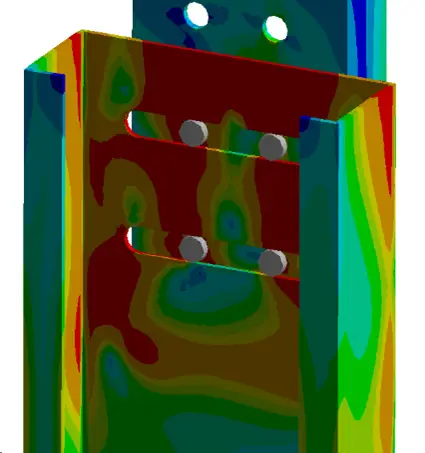

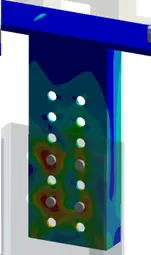
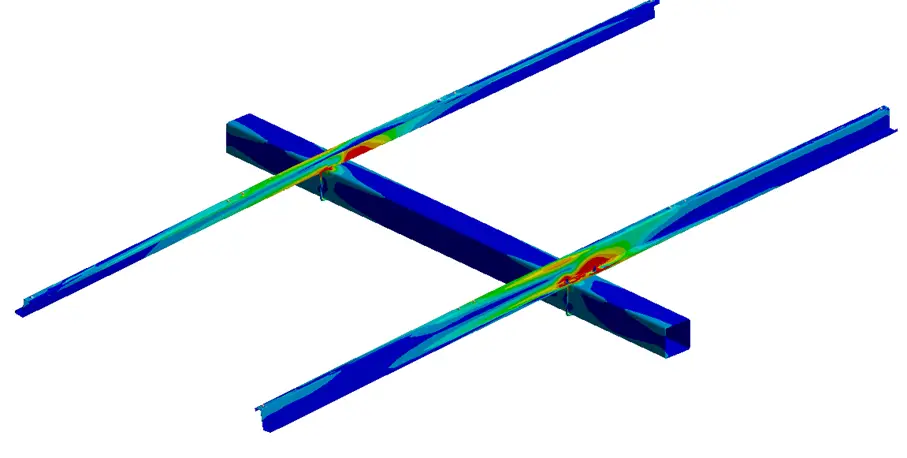
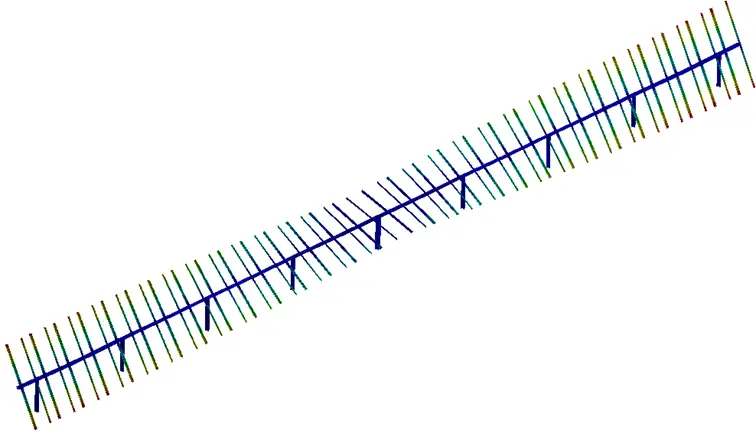
AnemioT
These studies are critical for addressing aeroelastic phenomena, wind-induced vibrations, and global stability issues in large-scale PV structures. By combining advanced simulation with physical testing, CADE ensures robust, reliable solutions according to the real dynamic behaviour for solar structures at site-specific plants, reinforcing its position as an international reference in engineering for renewable energy projects exposed to extreme wind conditions.
Do you want to learn more about aeroelasticity in photovoltaic installations?
If you would like more information about AnemioT and how to improve the safety, durability, and performance of your photovoltaic plant under demanding wind conditions, contact us.