Contactar
Business areas

Renewable Molecules

Hydrothermal gasification technology platform for transforming wet biomass and residual organic streams into high-value renewable molecules, through the development and industrialisation of conversion and valorisation processes.

Sewage sludge, digestates, algae and agro-industrial waste reach the plant with a high water content. To incinerate or gasify them by conventional routes they must be dried first, and drying consumes a large part of the energy they contain.

Wastewater treatment plants with sludge and biosolids, biogas plants that have to manage their digestates, the agri-food industry with wet waste, and energy companies looking to produce renewable hydrogen or methane from waste.

Urban and industrial wastewater treatment plantsBiogas plantsAgri-food industryWaste managersEnergy and gas
How it works

From wet waste to renewable gas

Above 374 °C and 221 bar, water enters the supercritical state: it is neither liquid nor gas, and it acts as the reaction medium. In that state, wet organic matter is converted directly into renewable gases, without drying or burning it.

El Potencial del Biogás y Biometano: Más allá de los Combustibles Fósiles.
INPUT

Wet organic waste

CADE SCWG treats everything from liquid streams to wet solids with 70% dry matter. Most hydrothermal processes only accept pumpable slurries; CADE feeds solids continuously with its own system.

  • Sewage sludge
  • Digestates
  • Agro-industrial waste
  • Algae
  • Biowaste
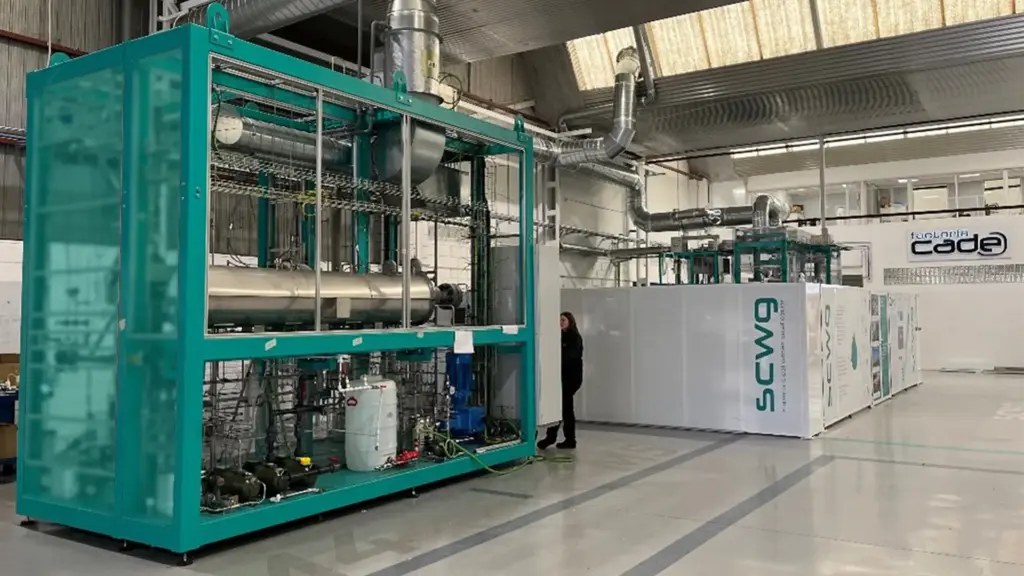
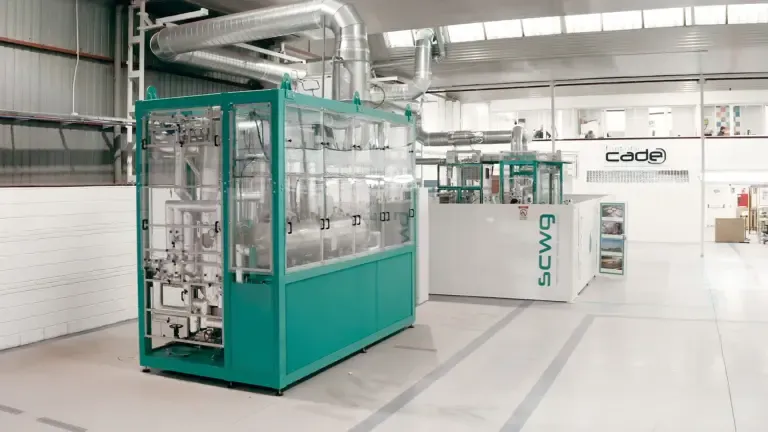
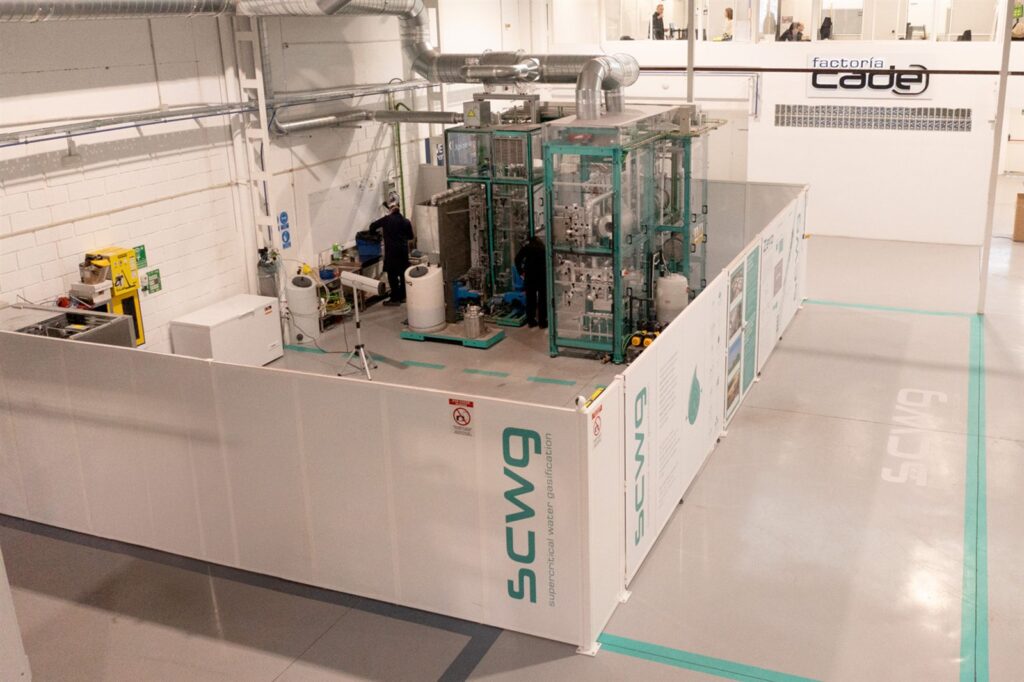
Planta DEMO de gasificación en agua supercrítica CADE SCWG en la Factoría de Innovación
PROCESS

Supercritical water reactor

In the reactor, organic matter is broken down and gasified without combustion. The salts, with the phosphorus, potassium and metals, are separated within the process itself, and the heat of the outlet stream is recovered.

Conducciones de hidrógeno renovable con aerogeneradores al fondo
OUTPUT

Renewable gases and co-products

A gas rich in hydrogen and methane, whose composition is configured for each application, for use as fuel or for grid injection. The process also returns treated water and recoverable minerals.

Own technology
CADE SCWG, gasificación en agua supercrítica

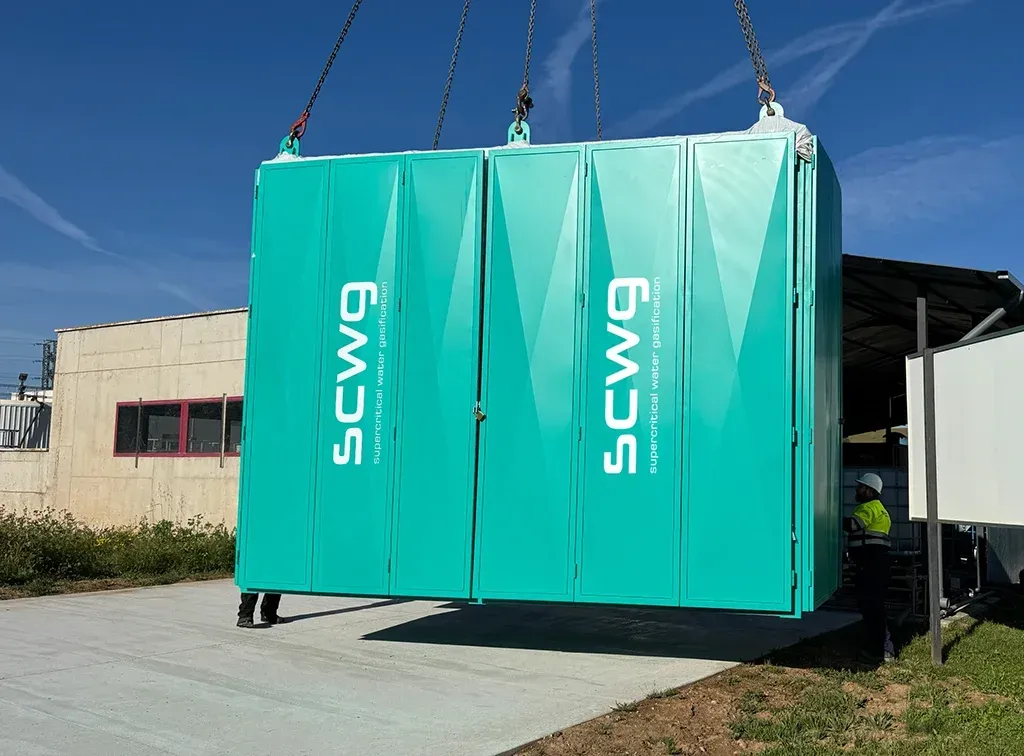
Validated at plant scale, scalable in modules

CADE validates each waste stream progressively: biomass analysis, trials on the test platform and operation in the DEMO plant, which treats up to 100 kg/h of wet biomass continuously. The DEMO plant is a smaller-scale replica of the industrial solution, with the same reactors and the same control design, and is the basis for modular industrial designs from 500 to 3,000 kg/h.

ECLOSION foto2
Projects

CADE SCWG in projects and publications

Reference projects, news and publications on CADE’s technology.

ECLOSION Salamanca 2025 09

ECLOSION project

A project of the Misiones Ciencia e Innovación programme to produce renewable hydrogen and biomethane from biowaste, in a consortium coordinated by Aqualia. Within it, CADE has commissioned its hydrothermal gasification technology in Salamanca.

CADE will bring its SCWG technology to Japan. CADE llevará su tecnología SCWG a Japón

CADE will take its SCWG technology to Japan

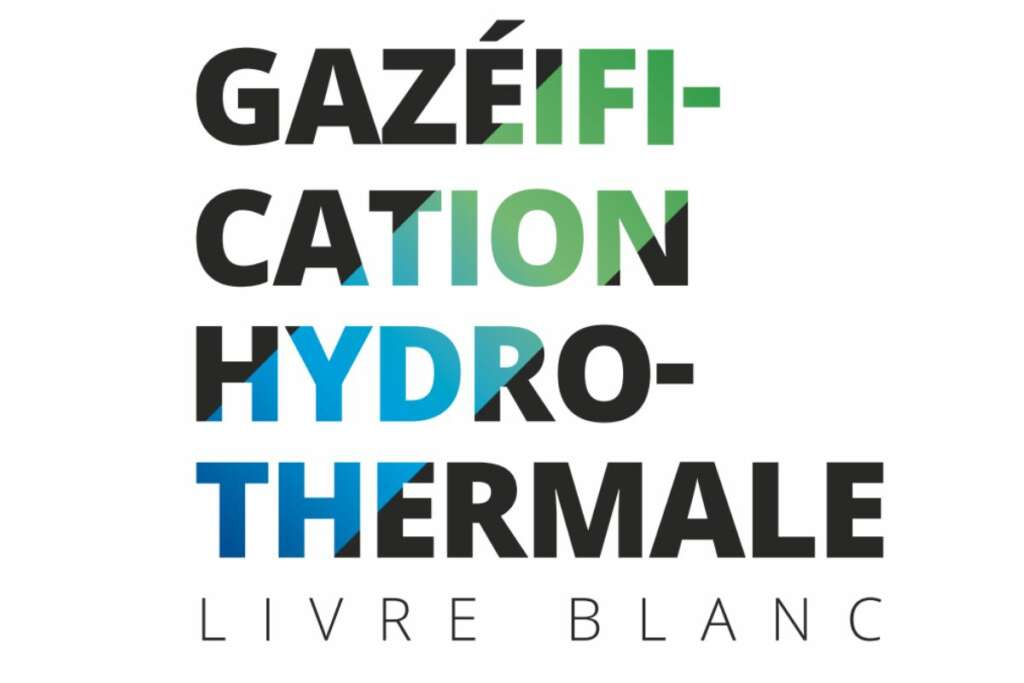
Hydrothermal Gasification White Paper

Hydrothermal gasification white paper

The first white paper on the gasification of wet biomass under supercritical conditions, published by GRTgaz. It analyses the maturity of the technology and its main developers in Europe and worldwide, CADE among them.

Technical articles

CADE will bring its SCWG technology to Japan. CADE llevará su tecnología SCWG a Japón
CADE participates in Pollutec Lyon 2025
A wet waste stream that is currently a disposal cost?

Describe your case and a CADE specialist will analyse it.