
CADE awarded the Thermal Energy Storage Pilot Plant for the CIIAE
Iberian Centre for Research in Energy Storage
📍Cáceres, Spain
The CIIAE Thermal Energy Storage Pilot Plant project, promoted by the Iberian Centre for Research in Energy Storage, represents one of the most ambitious scientific and technological initiatives launched in Spain in the field of energy transition and industrial decarbonisation. It is a unique infrastructure designed to accelerate the development, validation, demonstration and pre-industrial scale-up of advanced energy storage technologies, a key element in increasing the manageability of renewable energies and enabling low-carbon industrial processes.
The project is being developed as part of the creation of the CIIAE, a strategic scientific and technological infrastructure promoted through the Recovery, Transformation and Resilience Plan, funded by the European Union’s NextGenerationEU programme, and aimed at positioning the Iberian Peninsula, and Extremadura in particular, as one of Europe’s leading hubs for applied research in energy storage.
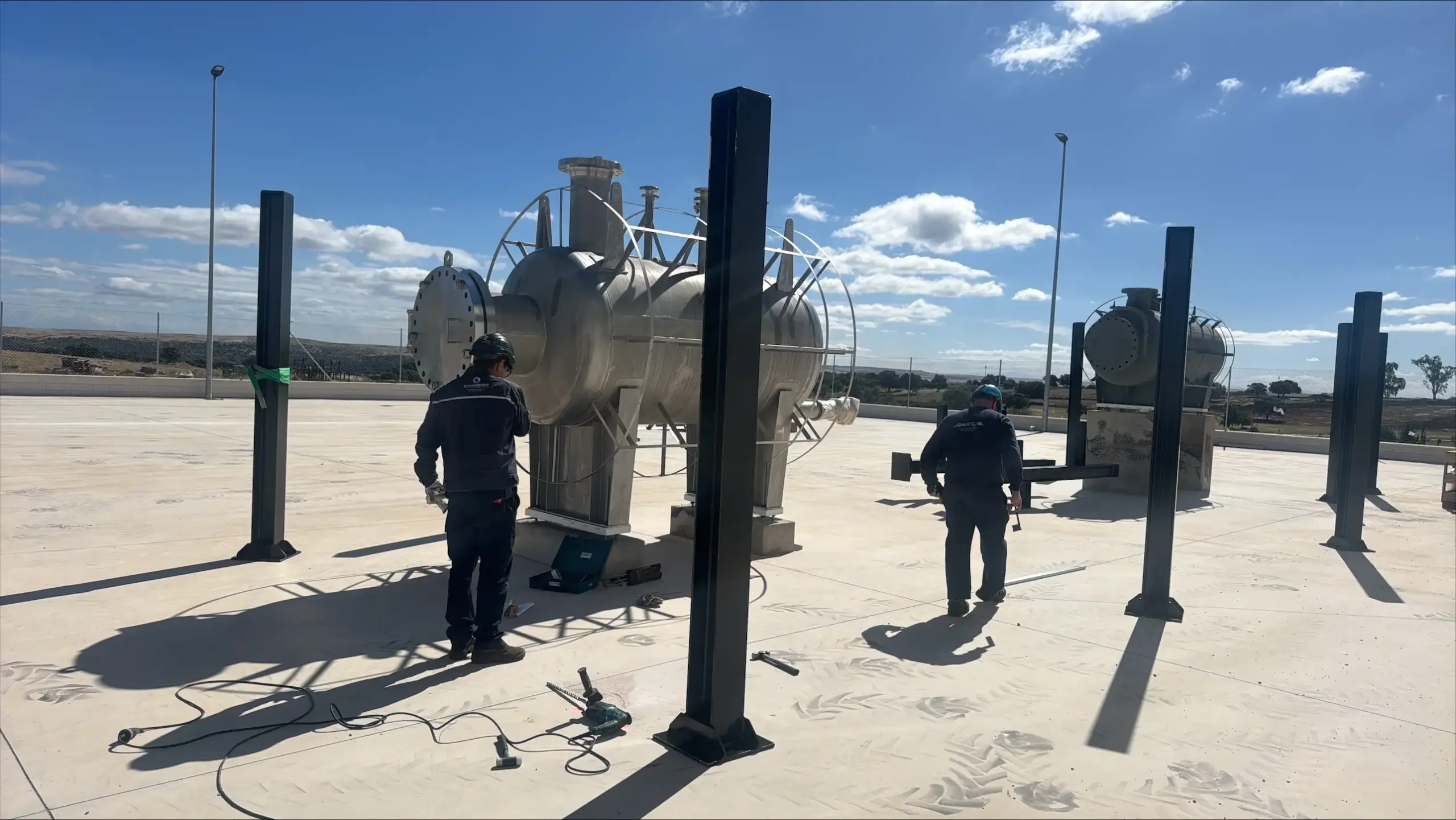
Within this context, CADE Soluciones de Ingeniería, CADE, is responsible for the comprehensive execution of the thermal energy storage pilot plant under file EXP 2025-01-CIIAE, delivering the full scope of engineering, supply, installation, integration, automation, commissioning and testing, legalisation, and after-sales support on a turnkey basis, enabling CIIAE to have a fully operational, flexible facility ready for advanced research.
WHAT IS THE CIIAE?
The CIIAE is a major scientific infrastructure designed to address one of the main challenges of the energy transition: how to store renewable energy in an efficient, flexible, scalable and economically viable way.
The growing penetration of renewable generation introduces a structural challenge: energy production does not always coincide with periods of demand. Energy storage is emerging as a critical technological vector for ensuring grid stability, operational flexibility, energy independence, industrial competitiveness and emissions reduction.
The CIIAE was created precisely to respond to this challenge through a scientific, technological and industrial approach, integrating capabilities that cover the entire innovation cycle: from basic materials science to the pre-industrial demonstration of energy technologies in relevant environments. It was established through the agreement signed between the Ministry of Science and Innovation, the Centre for Energy, Environmental and Technological Research, CIEMAT, the Regional Government of Extremadura and the Science and Technology Park of Extremadura, FUNDECYT-PCTEX.
The objective of the agreement is the creation, equipment and commissioning of the CIIAE within the framework of the Recovery, Transformation and Resilience Plan, funded by the European NextGenerationEU mechanism.
The CIIAE’s mission is to develop technologies that enable the efficient management of green energy production, overcoming the limitations of intermittency and facilitating its large-scale integration into energy and industrial systems. It is specifically focused on:
- Electrical storage.
- Hydrogen and Power-to-X.
- Thermal storage.
- Energy modelling.
- Life cycle analysis.
- Circular economy.
- Techno-economic analysis.
- Energy regulation.
- Prototyping of storage systems.
Its approach covers different levels of technological maturity, TRL 1 to 7, combining basic research with experimental validation and large-scale demonstration plants.
The CIIAE structures its capabilities around three major technological domains:
Electrical storage, focused on advanced batteries, new electrochemical materials, and the characterisation and validation of electrochemical storage systems.
Hydrogen and Power-to-X, aimed at the production, storage, transport and industrial use of green hydrogen, including synthetic fuels and derived energy vectors.
Thermal energy storage, which seeks to develop technologies capable of efficiently storing heat and cold for industrial applications, buildings, thermal management and grid flexibility. This is the area in which the project executed by CADE is framed.
The CIIAE is not merely a laboratory centre; it is designed as a scientific and industrial ecosystem composed of advanced laboratories, pilot plants, high-power testing infrastructures, microgrids, experimental energy systems and equipment for technological scale-up. The objective is to bridge the so-called “technological valley of death”, enabling the transition from academic research to pre-commercial validation.
PROJECT DESCRIPTION
The CIIAE Thermal Energy Storage Pilot Plant project consists of the design, engineering, supply, manufacturing, installation, automation, legalisation, commissioning and testing of an advanced Thermal Energy Storage Pilot Plant, conceived as an experimental infrastructure for the CIIAE for applied research and technological validation of heat-based energy storage systems.
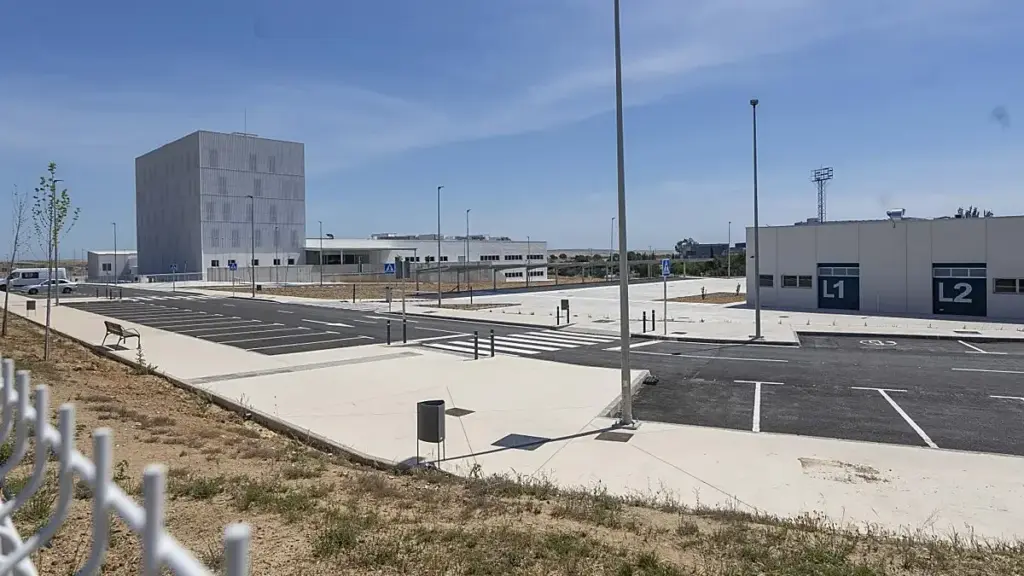
The facility is integrated within the pilot plant building of the CIIAE scientific and technological complex in El Cuartillo, Cáceres, and is conceived from the outset as a flexible, reconfigurable research infrastructure open to future evolution.
Unlike a conventional industrial facility, whose objective is the stable production of energy or process output, the CIIAE plant has a different purpose: to test, compare, optimise and validate thermal storage technologies under real or near-industrial-scale conditions, generating high-quality scientific data and facilitating subsequent scale-up towards commercial applications.
The project therefore responds to a critical need within the European energy system: to store renewable energy in the form of heat in an efficient and manageable way.
While electrochemical storage, batteries, dominates short-duration applications, many industrial sectors require energy storage in thermal form for:
- High-temperature processes.
- Industrial electrification.
- Energy recovery.
- Grid flexibility.
- Renewable hybridisation.
- Seasonal storage.
- Reduction of fossil fuel consumption.
In this context, the CIIAE plant will make it possible to answer fundamental technological questions:
- Which thermal technologies are most efficient?
- Which materials store heat most effectively?
- How do the tested storage technologies evolve thermally after hundreds of cycles?
- What degradation do they undergo?
- Which configuration offers the best economic performance?
- How can the different technologies be integrated with one another?
- How do the systems respond to variable charge and discharge profiles similar to those of a real electricity grid?
- What role can thermal storage play in the integration of renewable energies and the management of surplus energy?
- Which solutions have the greatest potential for industrial scalability?
The design of the plant applies the philosophy of maximising experimental flexibility while ensuring high operational robustness and industrial safety. Specifically, the aim is for many components to be removable, replaceable and able to evolve throughout the life of the centre. The plant must therefore allow for the agile replacement and/or maintenance of equipment, the change of thermal storage materials, the incorporation of new technologies and integration with future developments at the centre.
In addition, the required level of instrumentation is far higher than that of a conventional industrial facility, because the objective is not only to operate the plant, but to scientifically measure the thermal behaviour of the systems integrated into the pilot plant.
TECHNICAL FEATURES
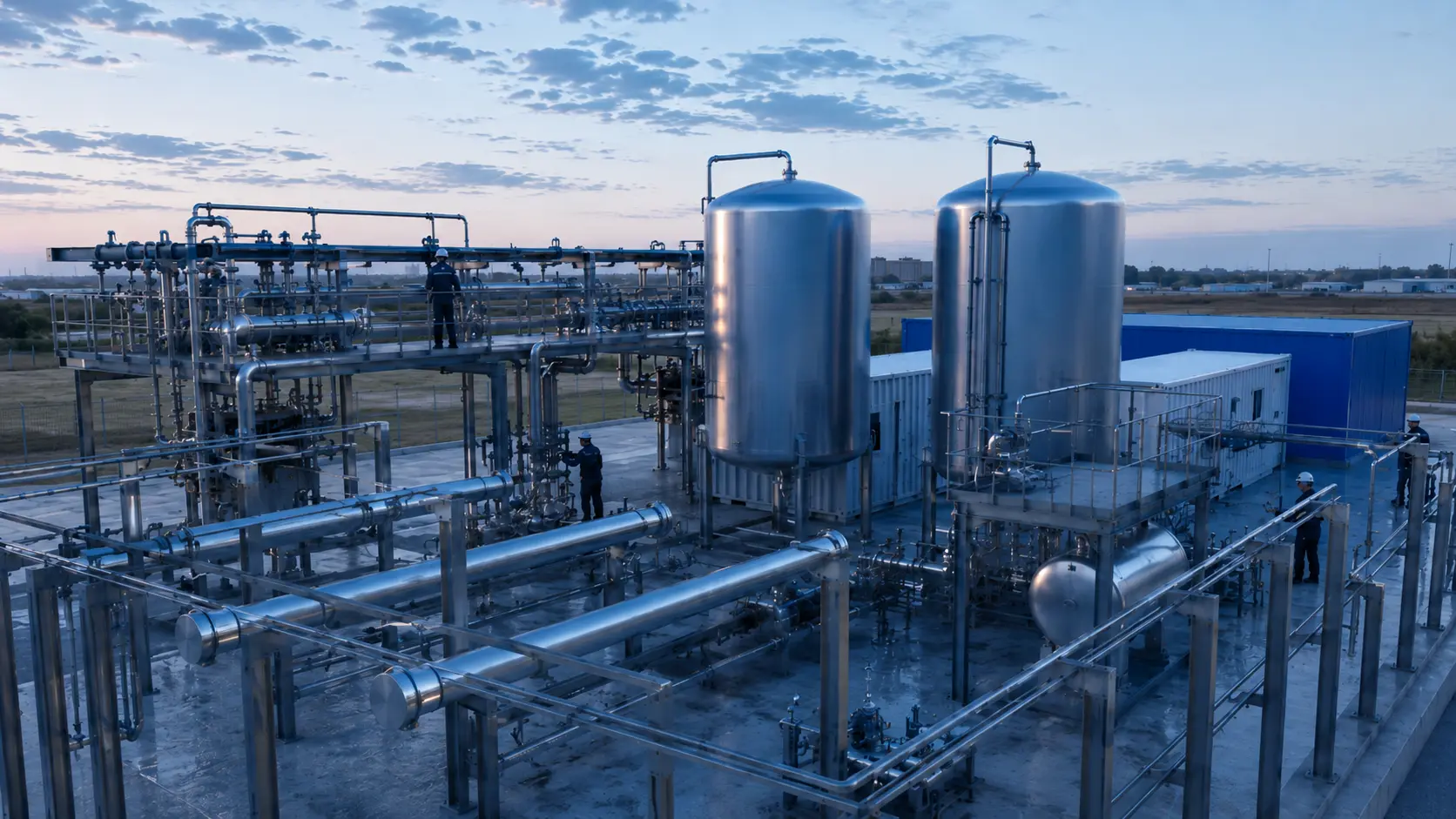
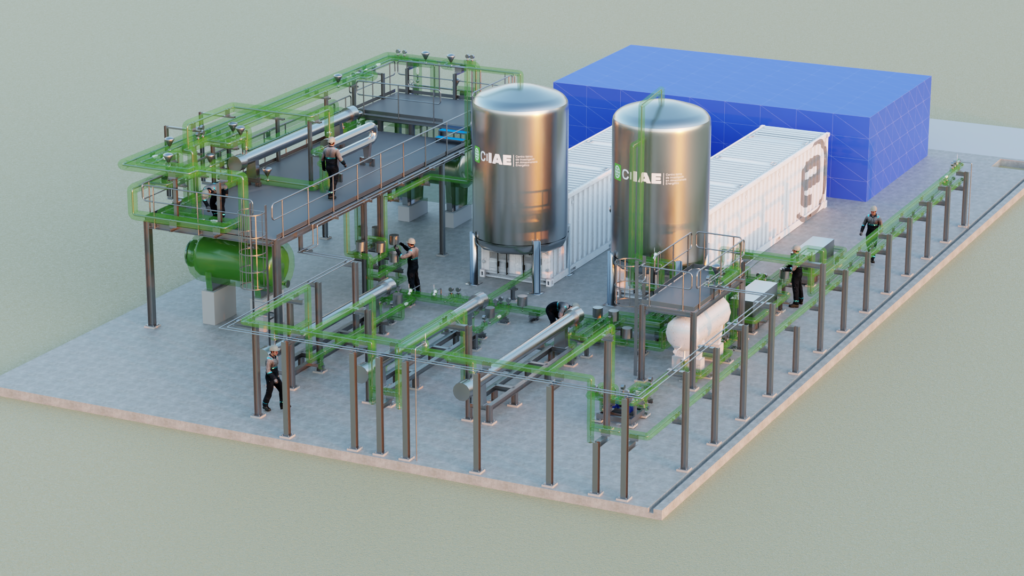
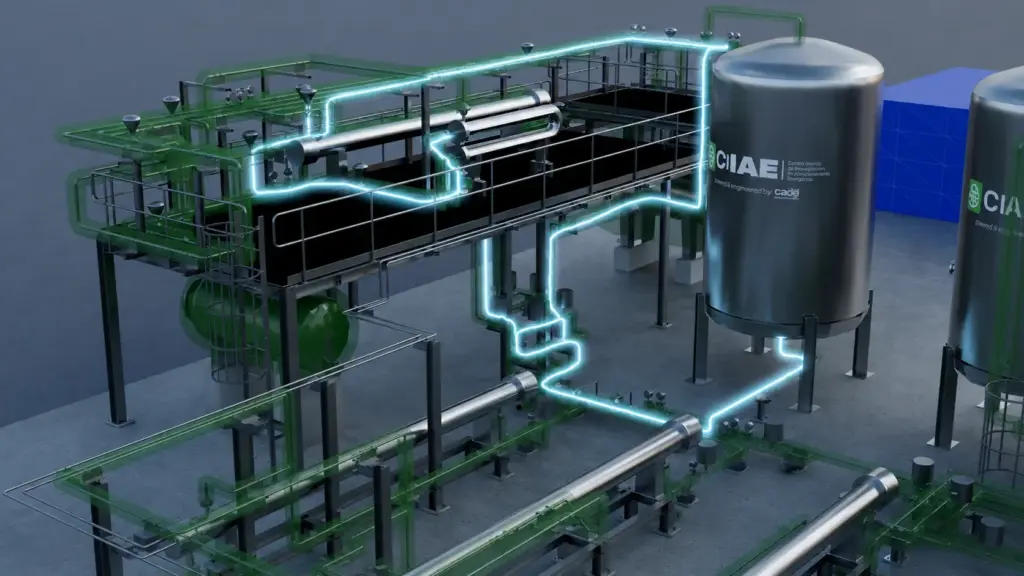
The CIIAE Thermal Energy Storage Pilot Plant is structured around a modular architecture, comprising a central thermal circuit and different energy storage technologies that can operate in a coordinated manner, both in charging mode and discharging mode.
The facility consists of five main technological blocks:
- Common module based on thermal transfer by heat transfer fluid, HTF.
- Molten salts module.
- Solid materials module.
- Phase change materials, PCM, module.
- Thermal integration system between technologies.
All of this is managed under a unified automation system based on PLCs, SCADA supervision, massive data acquisition, experimental monitoring and functional safety.
HTF Module, Heat Transfer Fluid.
Central core of the plant.
The functional core of the entire plant is the heat transfer fluid module, HTF, which acts as the shared thermal circulatory system between the different storage technologies.
Its purpose is to:
- Transport thermal energy between the different technologies of the pilot plant.
- Feed future experimental modules, for example, a sorption module.
- Transfer heat between different thermal energy storage systems.
- Enable energy integration between the different modules.
The selected fluid is Helisol 5A, polydimethylsiloxane, a high-performance thermal oil particularly suitable for operation at elevated temperatures. Unlike conventional thermal oils, this fluid enables stable and safe operation within highly demanding thermal ranges, offering high thermochemical stability, low degradation and excellent heat transfer properties. Its selection positions the pilot plant at an advanced technological level that is uncommon in experimental infrastructures of this type, allowing it to approach the real operating conditions of future industrial applications for high-temperature thermal energy storage.
The main design features are:
- Maximum electrical power of 300 kW.
- Operation up to 410 °C.
- Maximum design temperature of 425 °C.
- Capacity to operate with different temperature gradients.
- Optimised energy consumption.
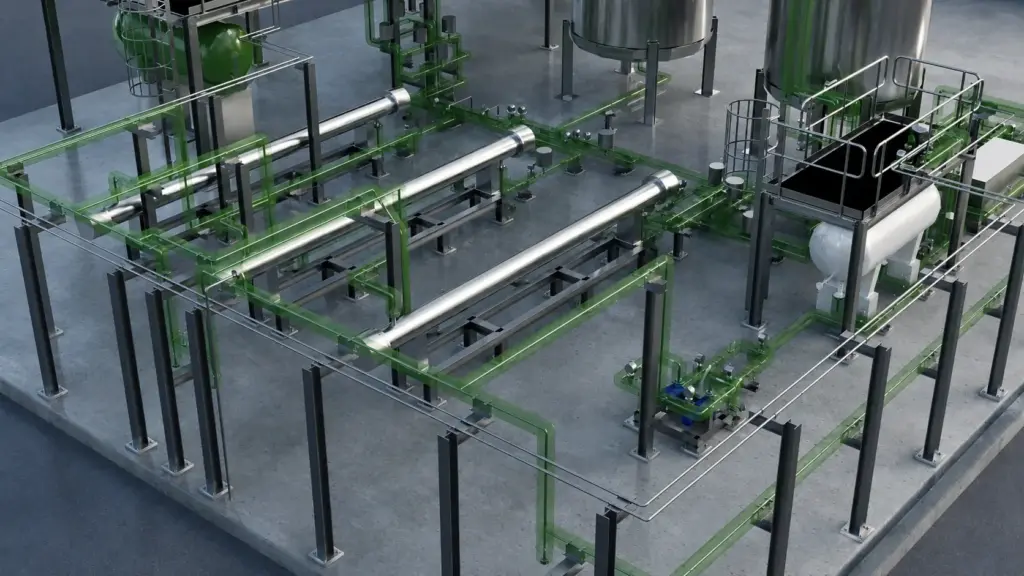
The functional core of the entire plant is the heat transfer fluid module, HTF, which acts as the shared thermal circulatory system between the different storage technologies.
Its purpose is to:
- Transport thermal energy between the different technologies of the pilot plant.
- Feed future experimental modules, for example, a sorption module.
- Transfer heat between different thermal energy storage systems.
- Enable energy integration between the different modules.
The selected fluid is Helisol 5A, polydimethylsiloxane, a high-performance thermal oil particularly suitable for operation at elevated temperatures. Unlike conventional thermal oils, this fluid enables stable and safe operation within highly demanding thermal ranges, offering high thermochemical stability, low degradation and excellent heat transfer properties. Its selection positions the pilot plant at an advanced technological level that is uncommon in experimental infrastructures of this type, allowing it to approach the real operating conditions of future industrial applications for high-temperature thermal energy storage.
The main design features are:
- Maximum electrical power of 300 kW.
- Operation up to 410 °C.
- Maximum design temperature of 425 °C.
- Capacity to operate with different temperature gradients.
- Optimised energy consumption.
The HTF is heated by modulating electric heaters, capable of operating under different thermal regimes in order to reproduce multiple experimental scenarios.
Cooling is carried out by air coolers, enabling operation across a wide thermal range from 410 °C down to approximately 60 °C.
One of the most innovative aspects is that the HTF does not necessarily have to be cooled after discharging energy, allowing residual heat to be reused in other modules and minimising overall energy consumption. This concept turns the plant into a thermally and energetically integrated system, rather than a set of isolated modules.
Molten Salts Module.
High-temperature thermal storage.
The molten salts system is probably the most mature thermal storage technology for high-temperature and high-energy-capacity applications, particularly in concentrated solar power plants. The CIIAE incorporates this technology as an experimental reference.
A mixture known as “solar salt” is used, consisting of 60% sodium nitrate, NaNO₃, and 40% potassium nitrate, KNO₃, capable of storing large amounts of thermal energy at very high temperatures.
The system must guarantee:
- Minimum storage capacity of 400 kWh.
- Minimum power of 100 kW.
- Full cycles of less than 4 hours.
- Operation between 500 and 565 °C.
The selected architecture is the classic two-tank configuration: hot tank and cold tank. During charging, the salts absorb energy from the HTF, increase their temperature and migrate from the cold salt tank to the hot tank; during discharging, the salts release energy, transferring heat to the HTF and returning once again to the cold tank.
One of the main challenges of molten salts is their tendency to crystallise. To prevent this, the project includes full electrical heat tracing and, where necessary, additional heating by means of electrical resistances.
Solid Materials Module.
Low-cost, high-robustness thermal storage.
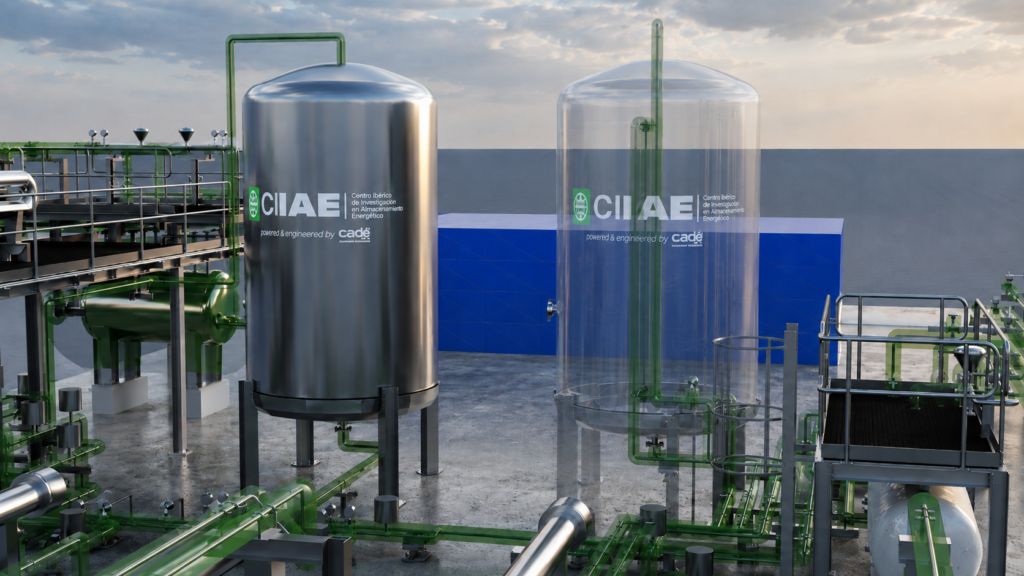
The CIIAE Thermal Energy Storage Pilot Plant incorporates a storage module based on solid materials, designed to investigate lower-cost solutions with high operational robustness and strong potential for industrial scalability.
The scientific interest of this technology lies in the fact that the solid materials used for thermal storage offer high thermal stability, low acquisition cost, widespread and inexpensive availability, no significant chemical degradation, and lower safety risks compared with molten fluids.
The facility is designed to operate with different families of materials. The key to the design lies precisely in this interchangeability, bearing in mind that the objective is not to validate a specific material, but to comparatively study the thermal behaviour of different storage media. This flexibility also opens up the possibility of evaluating recycled materials or industrial by-products as thermal storage media, adding a further circular economy and sustainability approach to the pilot plant.
The module is designed as a vertical shell-and-tube heat exchanger, where the solid material is housed in the shell and the HTF flows through the inside of the tubes, transferring thermal energy. This configuration makes it possible to thermally charge the solid material, storing energy, and subsequently discharge energy by returning heat to the heat transfer fluid.
The main technical features are:
- Operating temperature of 410 °C.
- Temperature gradients close to 200 °C.
- Minimum power of 60 kW.
- Minimum approximate volume of 4 tonnes of material, with materials of densities ranging from 1,500 to 2,300 kg/m³.
PCM Module, Phase Change Materials.
High energy density storage.
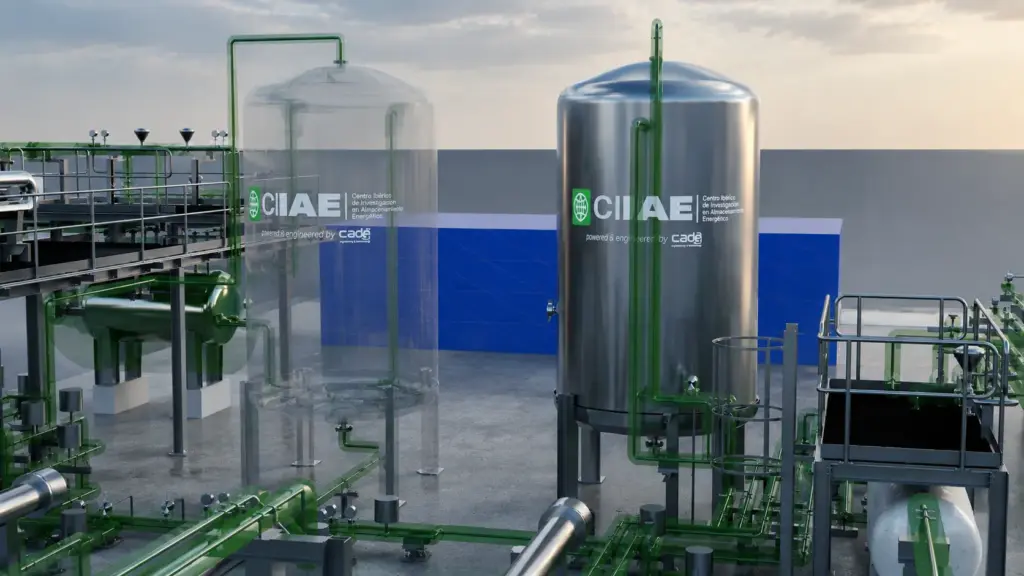
The storage module based on phase change materials, PCM, is probably one of the most promising fields of research in advanced thermal storage. Unlike storage in solids or salts, based on sensible heat, PCMs store energy by making use of the latent heat associated with phase change, usually solid-liquid. This enables a large amount of energy to be stored in relatively small volumes.
Three families of PCM have initially been considered:
- Palmitic acid.
- Rubitherm RT 100 or RT95.
- KNO₃/KCl mixture.
The technical features of this module are:
- Wide range of melting temperatures, from 60 °C to 410 °C.
- Minimum capacity of 120 kWh.
- Minimum power of 60 kW.
- Charge-discharge cycles between 2 and 3 hours.
The reactor is configured as a highly flexible vertical shell-and-tube system, with two possible operating modes:
Mode 1. Non-encapsulated PCM.
- The PCM is housed in the shell.
- The HTF flows inside the tubes.
Mode 2. Macroencapsulated PCM.
- The tubes can be removed.
- The HTF flows freely inside the shell.
- The PCM remains encapsulated inside the shell.
This experimental flexibility is extraordinarily valuable from a scientific perspective, as it makes it possible to compare radically different heat exchange architectures without rebuilding the system.
Thermal integration.
One of the most sophisticated aspects of the CIIAE Thermal Energy Storage Pilot Plant project is its commitment to thermal integration between technologies.
The centre’s approach is not only to study isolated technologies, but to analyse how different solutions can cooperate energetically. Specifically, the project considers energy exchange between modules, the reuse of residual heat and the cross-transfer of thermal energy. For example, the heat released by the salts module during discharge can be used to feed processes such as those involving phase change materials or solid materials.
This makes it possible to study hybrid architectures similar to those that could later be implemented in real industry.
The pilot plant also includes the possibility of connection to an electrical microgrid of up to 2 MW, which will make it possible to simulate different real operating scenarios, including load profiles associated with renewable grid surpluses and discharge profiles linked to variable demands from users or industrial processes. This capability gives the facility a high degree of experimental flexibility to analyse advanced energy management strategies and sector integration.
The CIIAE Thermal Energy Storage Pilot Plant is prepared for future growth, as the design provides free connections for future integration with other CIIAE infrastructures, including hydrogen plants, Power-to-X systems or new experimental thermal systems, for example, a thermochemical sorption storage module. The plant is therefore deliberately conceived as an evolving and expandable infrastructure.
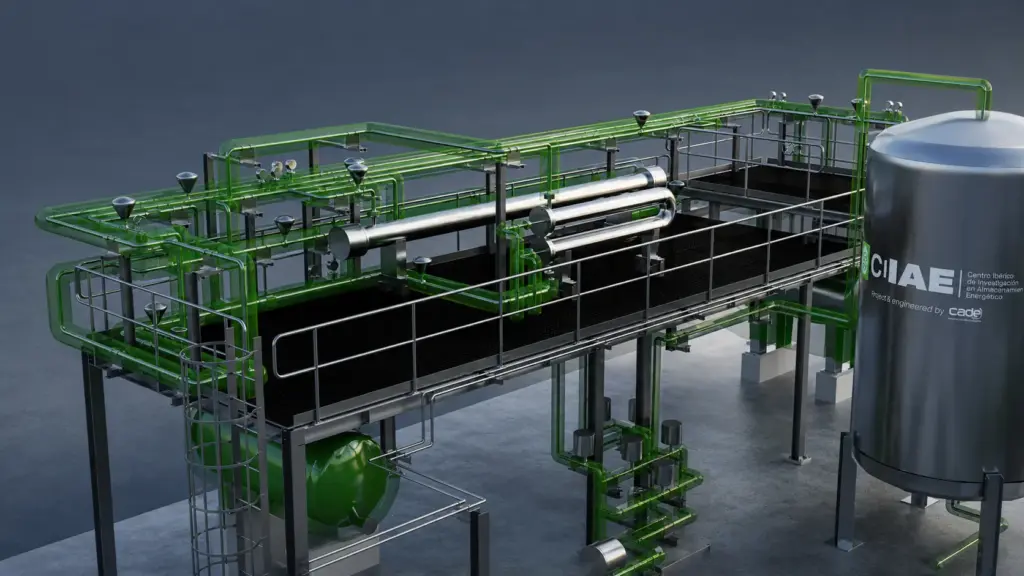
Automation, Control and Scientific Data Acquisition.
The plant incorporates an advanced industrial automation architecture, essential for an experimental research environment. The control system is implemented through an industrial control PLC, while supervision is carried out through an open and configurable SCADA platform, with advanced functions including:
- Real-time visualisation.
- Flexible operation between different modules, enabling full thermal integration.
- Critical alarms.
- Historical trends.
- Trend charts.
- PID control.
- Experimental traceability.
- Event management.
A particularly relevant aspect is that the CIIAE requires full access to the software and signal mapping, something highly unusual in closed industrial environments.
In addition, the plant is conceived as a massive scientific data acquisition system. The temporal resolution of the measurements can reach the millisecond range, making it possible to capture transient thermal phenomena with enormous precision. It is not merely a matter of “operating a plant”, but of building an environment for the generation of reproducible scientific knowledge.
Industrial Safety.
Safe Operating Philosophy.
Operation with fluids at temperatures above 500 °C, molten salts, thermal oils and large energy loads requires an extremely rigorous safety approach. Therefore, multiple layers of protection are required:
- Process safety.
- Redundant sensors.
- Automatic interlocks.
- Safety valves.
Thermal safety.
- Full insulation of surfaces.
- Control of thermal losses.
- Prevention of accidental contact.
Environmental safety.
- Retention bunds.
- Spill containment.
- Contaminated water management.
- Environmental mitigation.
Operational safety.
- Visual and audible alarms.
- Remote supervision/monitoring.
- Fire protection measures.
- ATEX equipment.
CADE’s Role in the Execution of the Project
The project is executed on a comprehensive turnkey basis, which means that CADE does not act merely as an equipment supplier, but as the full integrator of the infrastructure.
The scope includes:
- Engineering
- Conceptual and basic engineering.
- Detailed engineering.
- Technical reports.
- Documentation for legalisation and permit obtainment.
- Drawings and calculations.
- Supply
- Thermal equipment.
- Pumps.
- Heat exchangers.
- Heaters.
- Piping and valves.
- Electrical and control panels.
- Instrumentation.
- Automation.
- Installation
- Civil works.
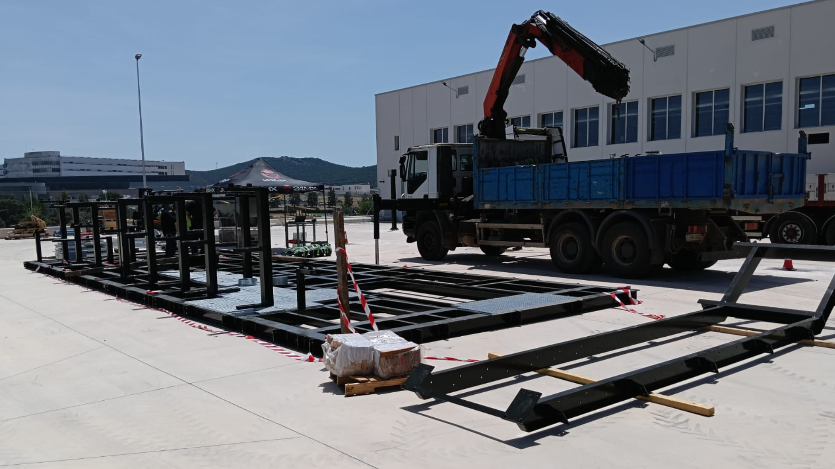
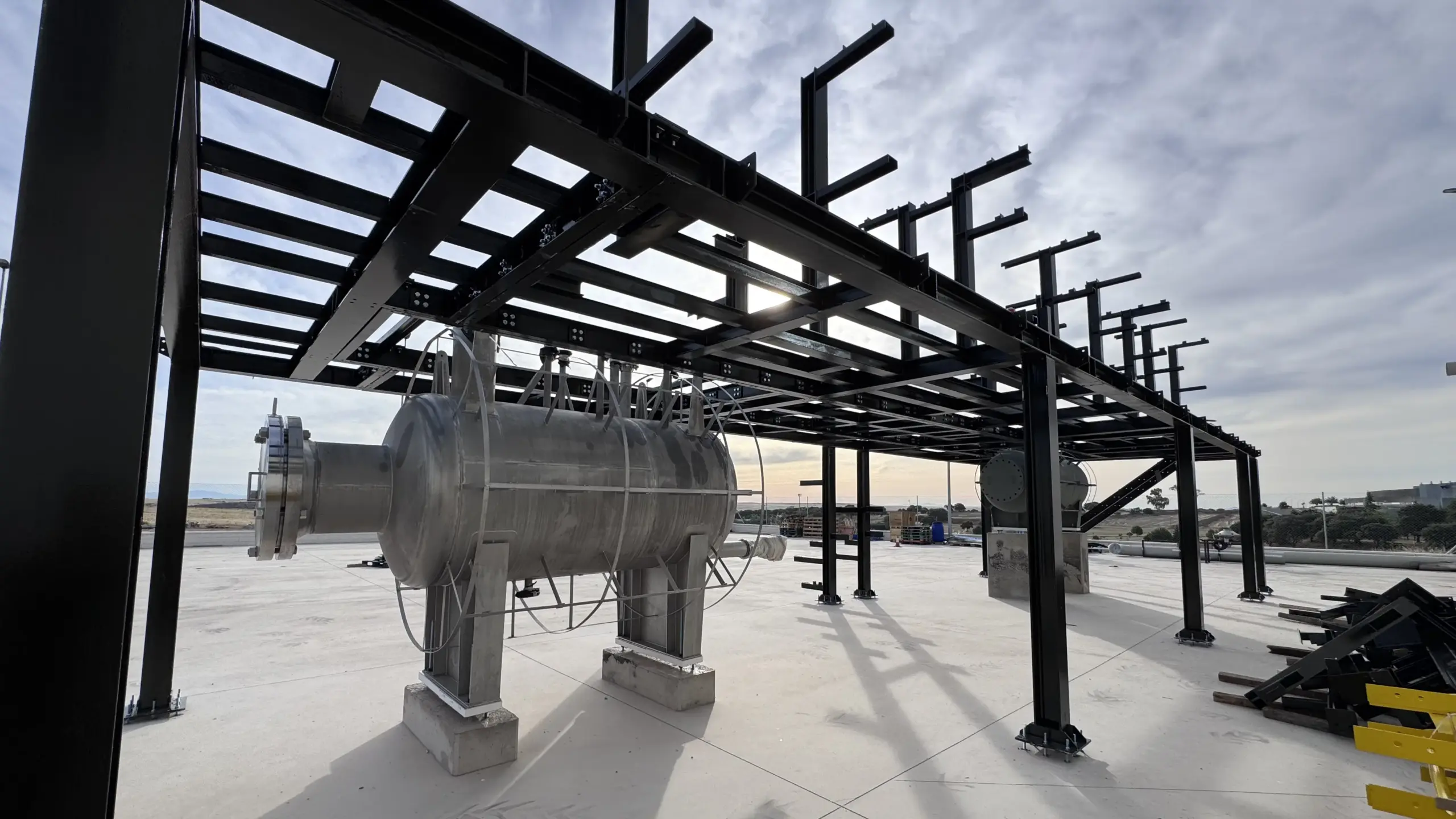
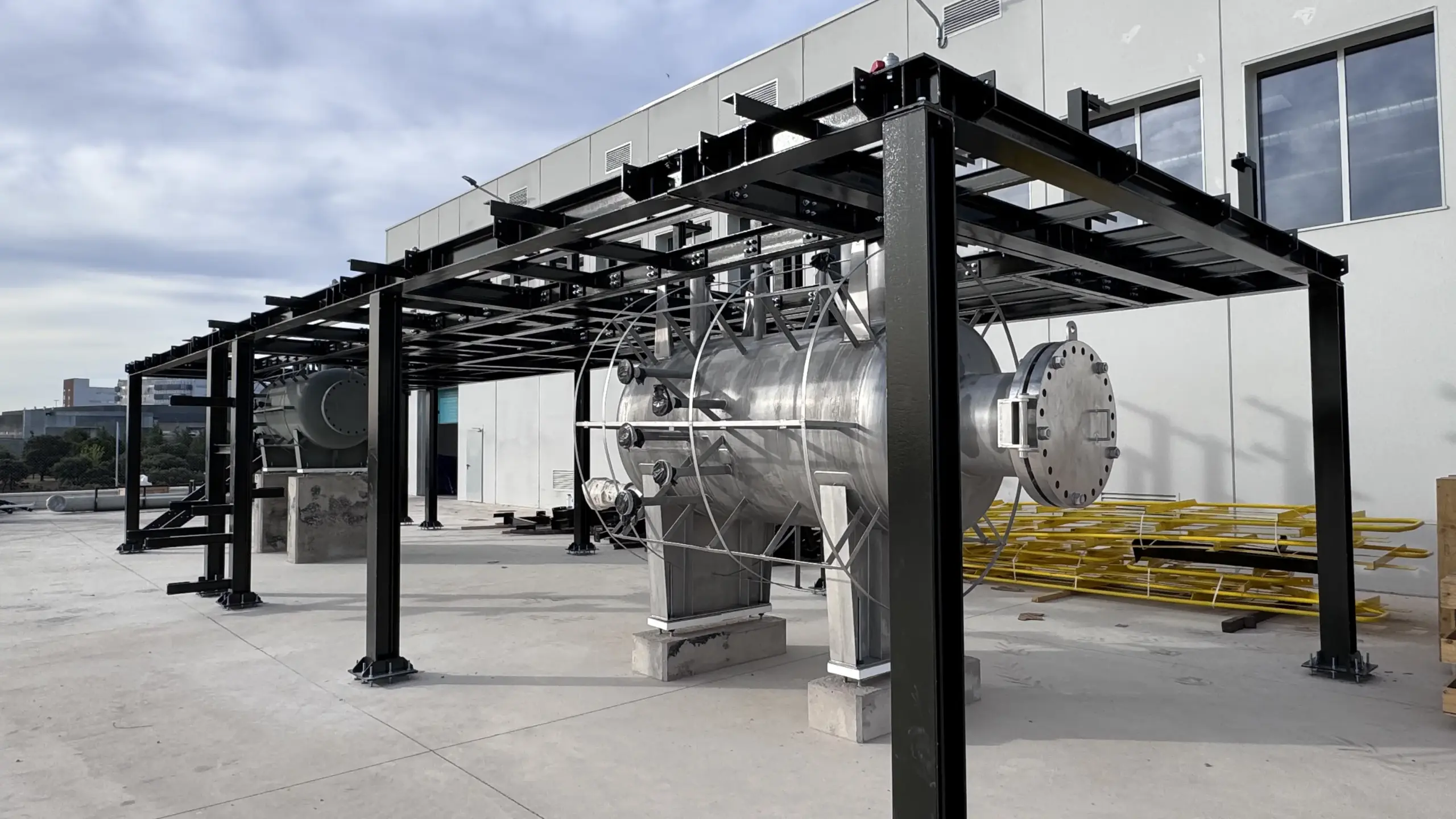
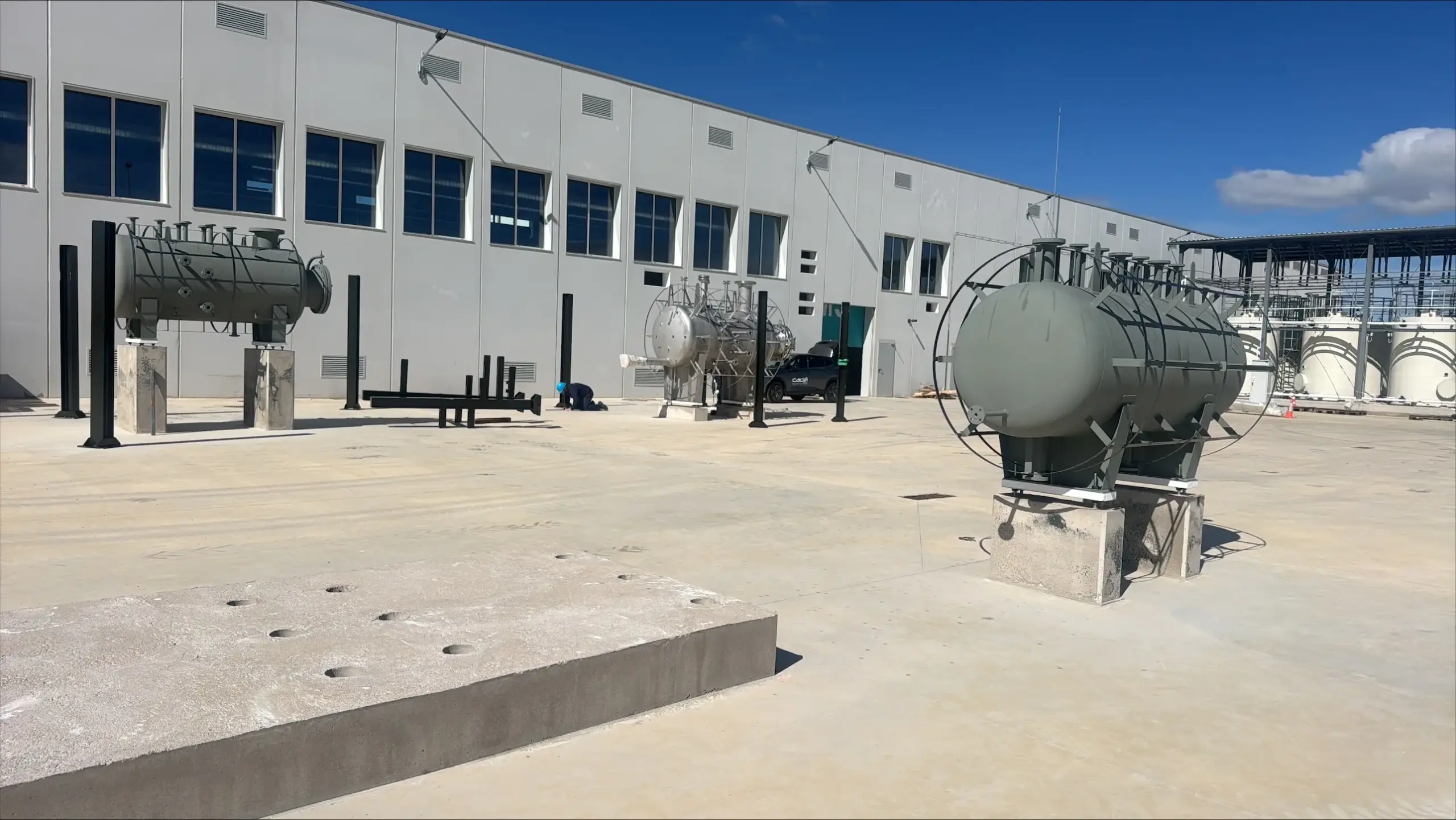
- Mechanical assembly, including steel structures, equipment and piping.
- Electrical and control installations.
- Thermal insulation.
- Legalisation and commissioning
- FAT/SAT testing.
- Functional validation.
- Operator training.
- Documentation handover.
- Manuals.
- Calibrations.
- Legalisation and commissioning
- FAT/SAT testing.
- Functional validation.
- Operator training.
- Documentation handover.
- Manuals.
- Calibrations.