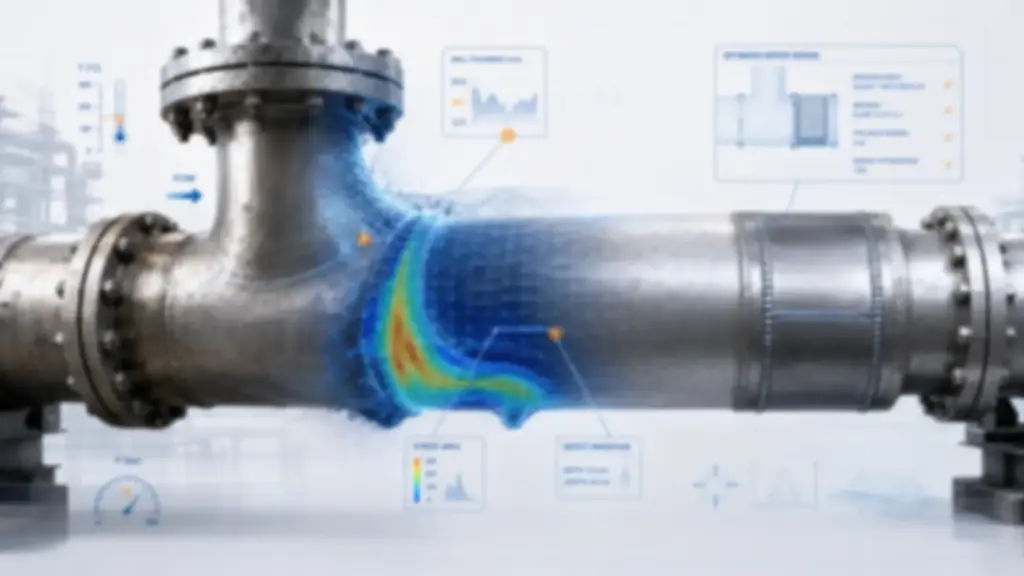

Sewage sludge, digestates, biosolids and certain industrial organic streams have something in common: they contain recoverable carbon and energy, but also large amounts of water. That moisture can become a barrier for many valorisation routes. CADE SCWG, the supercritical water gasification platform developed by CADE, starts from a different premise: using the aqueous medium itself to convert wet organic matter into a gas stream that can open up different value chains.
What is CADE SCWG?
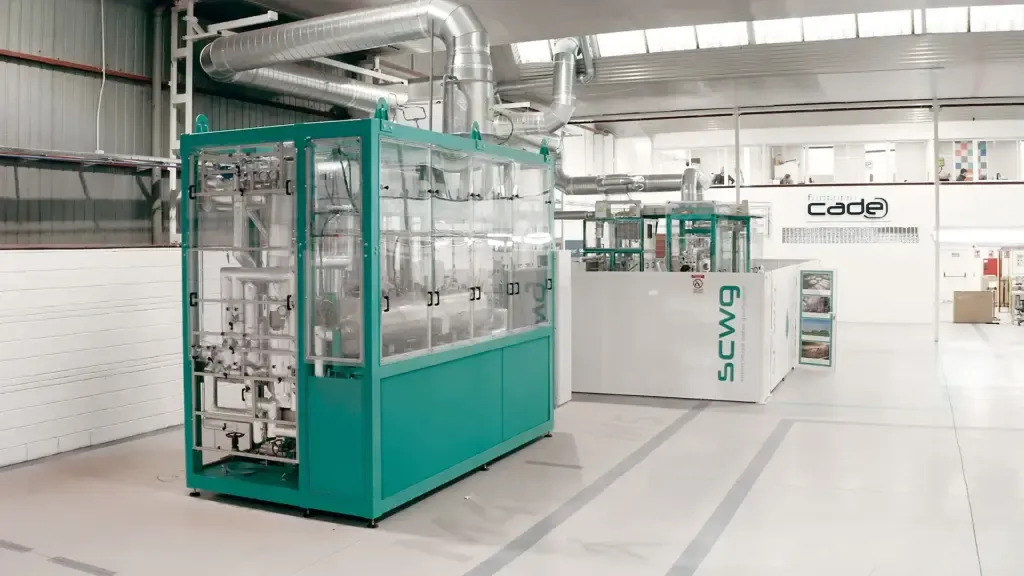
CADE SCWG is a technology platform developed by CADE based on supercritical water gasification (SCWG). Its aim is to convert wet and complex organic streams into a gas composed mainly of hydrogen (H₂), carbon monoxide (CO), carbon dioxide (CO₂) and methane (CH₄), together with other species whose presence depends on the feedstock and the process conditions.
The technology should not be understood merely as a reactor, nor as a solution tied to a single end product. Its value lies in acting as a front-end technology: it receives a difficult waste stream and turns it into a gaseous platform that can be conditioned and integrated with different downstream processes.
Why water changes the logic of valorisation
In conventional biomass gasification and other thermochemical processes, high moisture content can be penalising, because part of the available energy must be spent on removing or evaporating water before conversion. The technical literature identifies the ability to process wet biomass without an energy-intensive drying step as one of the main potential advantages of supercritical water gasification.
The critical point of water lies at approximately 374 °C and 22.1 MPa. Above these conditions, its properties change significantly and water behaves as a reaction medium that differs from conventional liquid water. This makes it possible to consider routes for converting organic matter directly in a high-temperature, high-pressure aqueous environment.
For CADE, the industrial implication is particularly relevant: instead of designing the entire chain around the need to remove water, CADE SCWG seeks to design it around the ability to work with streams in which water is already present.
What types of waste may be of interest?
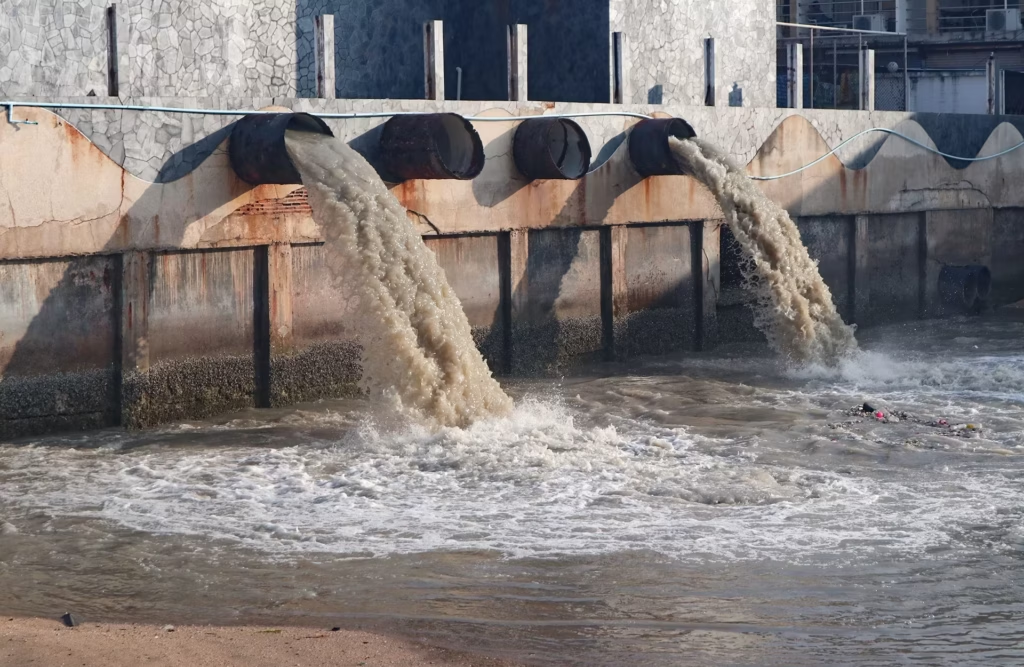
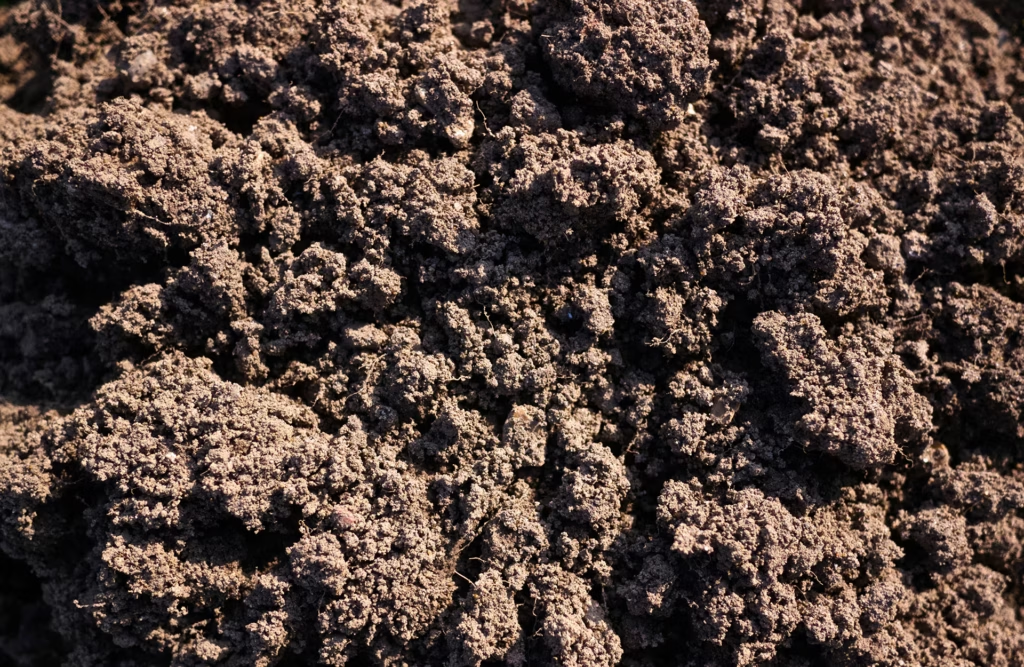
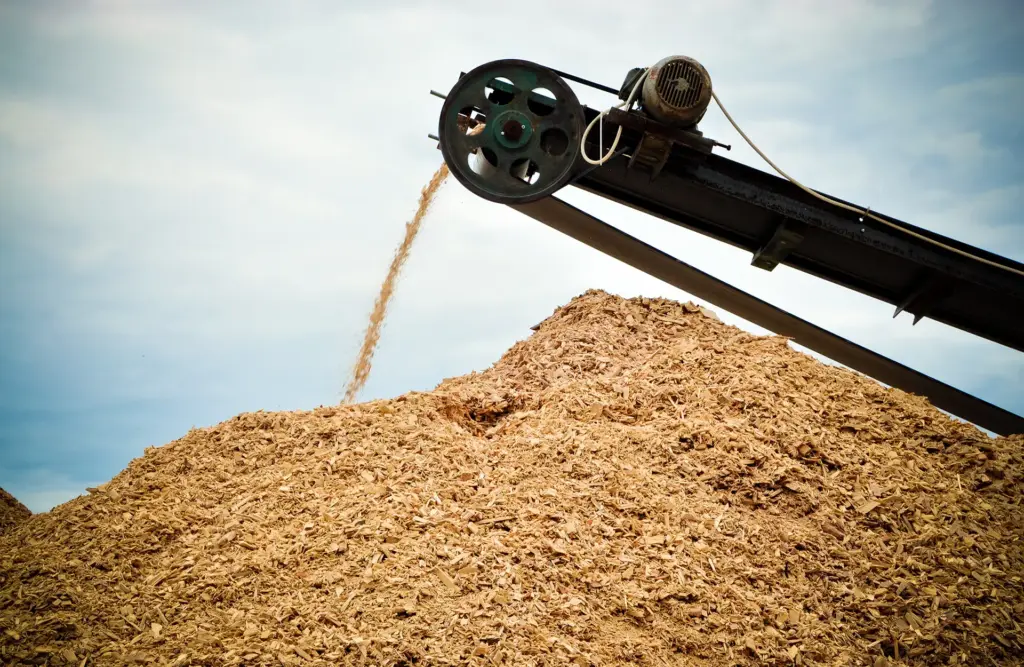
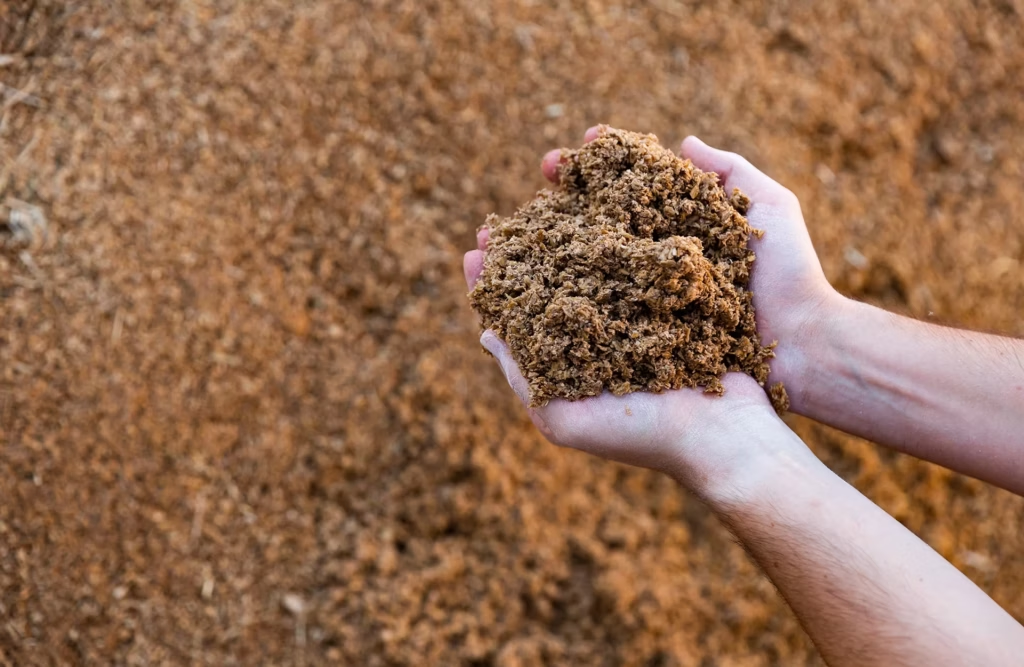
The natural field of application is organic streams whose moisture content, viscosity, solids concentration or composition call for the assessment of specific technologies. These may include municipal or industrial sewage sludge, digestates, biosolids, certain agro-industrial residues and industrial organic streams.
This does not mean that all streams are equivalent or that a universal configuration exists. On the contrary: one of the development principles of CADE SCWG is to treat the feedstock as a design variable. Water, organic matter, solids, salts, sulphur, inorganics, viscosity and hydraulic behaviour all influence the process and must be characterised before a solution is defined.
From waste to syngas
Supercritical water gasification converts part of the organic matter into gaseous products. Depending on the waste, the operating conditions and the catalytic scheme, the stream may contain different proportions of H₂, CO, CO₂ and CH₄.
This is where a fundamental difference emerges between simply producing gas and producing a useful industrial intermediate: not all applications require the same composition. A hydrogen-oriented route may target a different profile from that required by a chemical synthesis or by Fischer-Tropsch.
That is why the development of CADE SCWG is not limited to achieving conversion. It also addresses the relationship between feedstock, reaction chemistry, gas composition, conditioning and integration with the downstream process.
One platform, multiple applications
The same technology front-end can open up different valorisation routes. The right application depends on the available stream, the scale, the existing infrastructure, local demand and the requirements of the downstream technology.
Waste management and valorisation
In certain cases, treatment and valorisation can form part of the same strategy. The objective is no longer solely to reduce or manage a waste stream, but also to recover part of its carbon and energy in a usable stream.
Hydrogen production
SCWG is widely studied as a route to produce hydrogen-rich gases from biomass and wet waste. For industrial deployment, in addition to H₂ production, separation, purification, energy balance and integration with end-use demand must also be considered.
Energy and renewable gases
Depending on its composition and subsequent treatment, the gas produced can be assessed for energy applications or for routes towards renewable gases. The design must consider the complete system, not just the reaction.
Syngas for synthesis and high-value molecules
CO and H₂ are key intermediates in numerous chemical value chains. Converting residual carbon into a conditioned syngas can make it possible to connect wet waste with processes that have traditionally relied on fossil feedstocks or other synthesis gases.
Sustainable fuels and SAF
Sustainable fuels are one particular application of this platform. In the case of Sustainable Aviation Fuel (SAF), CADE SCWG can be studied as a front-end technology capable of converting certain wet wastes into syngas and then connecting that stream with synthesis routes such as Fischer-Tropsch.
The strategic interest lies in the feedstock. ReFuelEU Aviation sets out a growing SAF uptake at European Union airports: 2% from 2025 and 70% by 2050. As demand increases, diversifying sustainable and waste-based feedstocks may become increasingly important.
CADE SCWG does not aim to replace fuel synthesis technologies. Its potential positioning is complementary: broadening the range of feedstocks that can be converted into an intermediate suitable for downstream processes.
Syngas composition matters
For a conversion platform to have industrial value, the intermediate product must meet the needs of the next stage. In integration with Fischer-Tropsch, for example, the H₂/CO ratio, impurities and gas conditioning are relevant variables. On a route towards hydrogen, the priorities may be different.
This principle guides the development of CADE SCWG: product engineering begins inside the reactor, but continues through gas cleaning, separation, energy recovery and connection with the downstream process.
From reactor to industry
A technically viable reaction is not yet an industrial technology. Taking SCWG to continuous operation requires solving the feeding and pressurisation of complex streams, heat transfer, materials selection, management of solids and inorganics, phase separation, gas conditioning, energy recovery, control, safety and plant integration.
The scientific literature identifies corrosion, plugging, solids management and reactor design among the key challenges for scaling up SCWG. For this reason, CADE approaches development from a systems engineering perspective, not solely from reaction chemistry.
The CADE approach
CADE is developing CADE SCWG around one central idea: turning wet and complex organic waste into a platform capable of connecting with different value chains.
This means assessing each project from the perspective of the complete system: what waste is available, how it is fed, what gas composition can be obtained, which product makes most sense, what conditioning is required and how the unit integrates with the existing industrial infrastructure.
The application may be waste management, hydrogen, energy, renewable gas, chemical molecules or sustainable fuels. The technology platform is the same; what changes is the value chain we build around it.
From difficult waste to new feedstocks
The energy transition and the circular economy do not depend solely on inventing new products. They also depend on making better use of the resources that already exist.
Wet waste is a carbon source that, in many cases, is difficult to incorporate into conventional routes. CADE SCWG seeks to open a pathway to convert these streams into usable gaseous feedstocks.
From waste to syngas. From syngas to molecule. From molecule to application.
If your organisation manages wet organic streams or is exploring new routes to produce hydrogen, energy, renewable molecules or sustainable fuels, contact CADE to assess the technical fit of CADE SCWG within your value chain.