
Automated Stacking: continuous flow and perfect bundles at end-of-line
Automate end-of-line stacking to maintain production flow, improve bundle consistency, and reduce manual handling with greater safety.
📍Toledo, Castilla- La Mancha, España.
Project
Description
Automated profile stacking was developed to modernise and stabilise the discharge process of a roll forming line, with a clear focus on bundle formation, profile extraction and end-of-line flow. The original process relied heavily on manual handling and operator adjustments to achieve aligned bundles, directly affecting cycle time, safety and finished product consistency.
The objective was to implement an automated profile stacking system capable of receiving profiles from the line, positioning them correctly in the pick-up area and forming repeatable bundles under real production conditions. The solution had to integrate with the existing machine while maintaining continuous operation and improving working conditions in a critical handling area.
By replacing manual adjustments with a controlled handling sequence, the project aimed to reduce process variability, improve bundle geometry and ensure a more stable outfeed. This automated profile stacking solution also helps reduce downstream corrections and supports safer, more reliable end-of-line operation.
The
Challenge
The main challenge was to transform profile discharge and bundle formation into a reliable and continuous process without stoppages or constant manual intervention. Profiles had to reach the handling area in the correct position every time, with enough consistency to allow stable pick-up and stacking.
The end-of-line also had to keep production moving while strapping and bundle removal tasks were carried out. This required a design capable of absorbing production flow, managing intermediate buffer capacity and preventing bottlenecks during peak output periods.
Additional constraints included integration with the existing equipment, coordination of movements in a real industrial environment and safe operator access whenever intervention was required. The process had to be robust, easy to operate and less dependent on constant adjustment.
Another important requirement was to ensure that the automated profile stacking solution could adapt to production variations without compromising bundle quality, line stability or operator safety. This meant designing a system capable of maintaining consistent handling performance under real plant conditions and across different production rhythms.
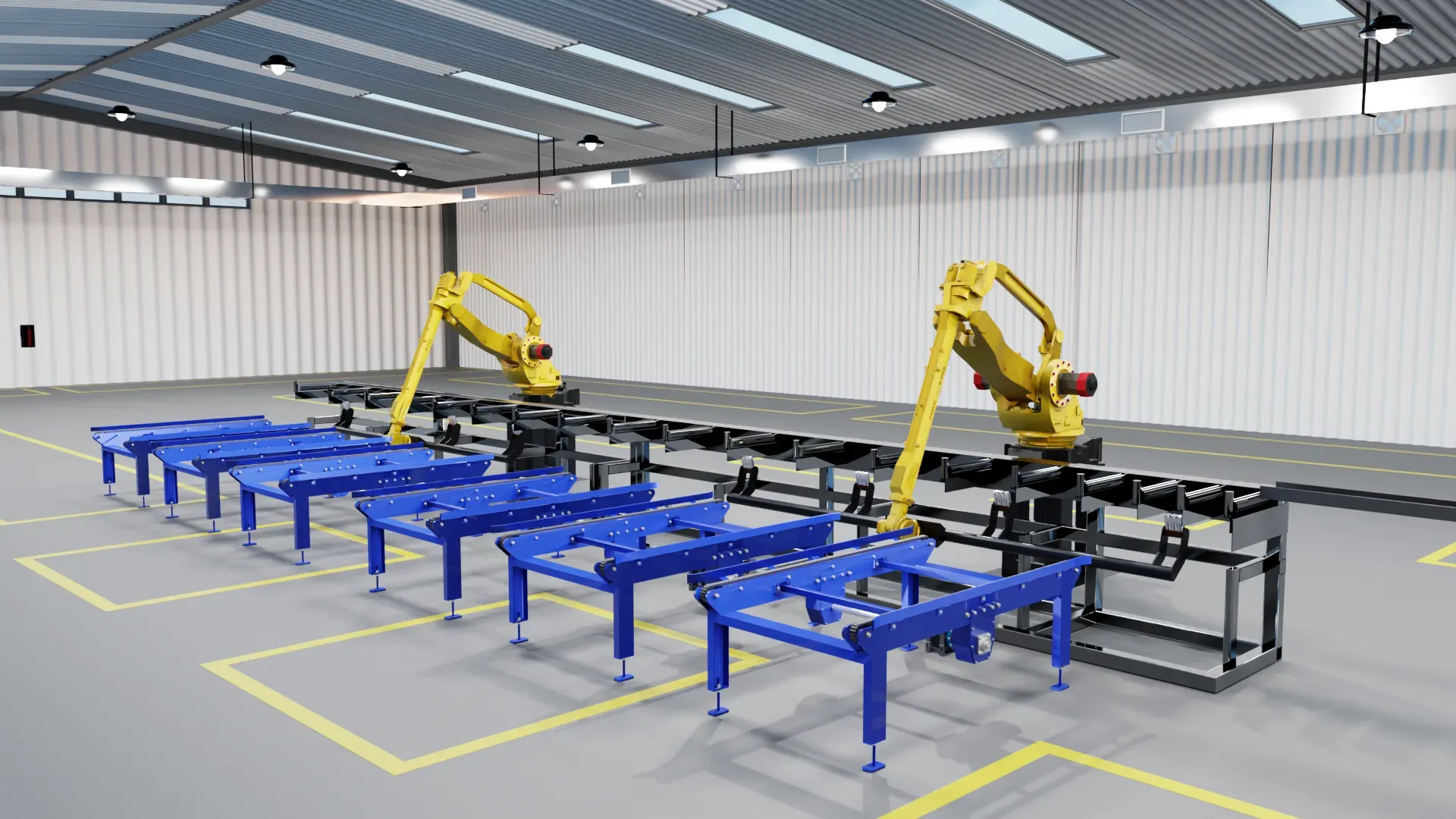
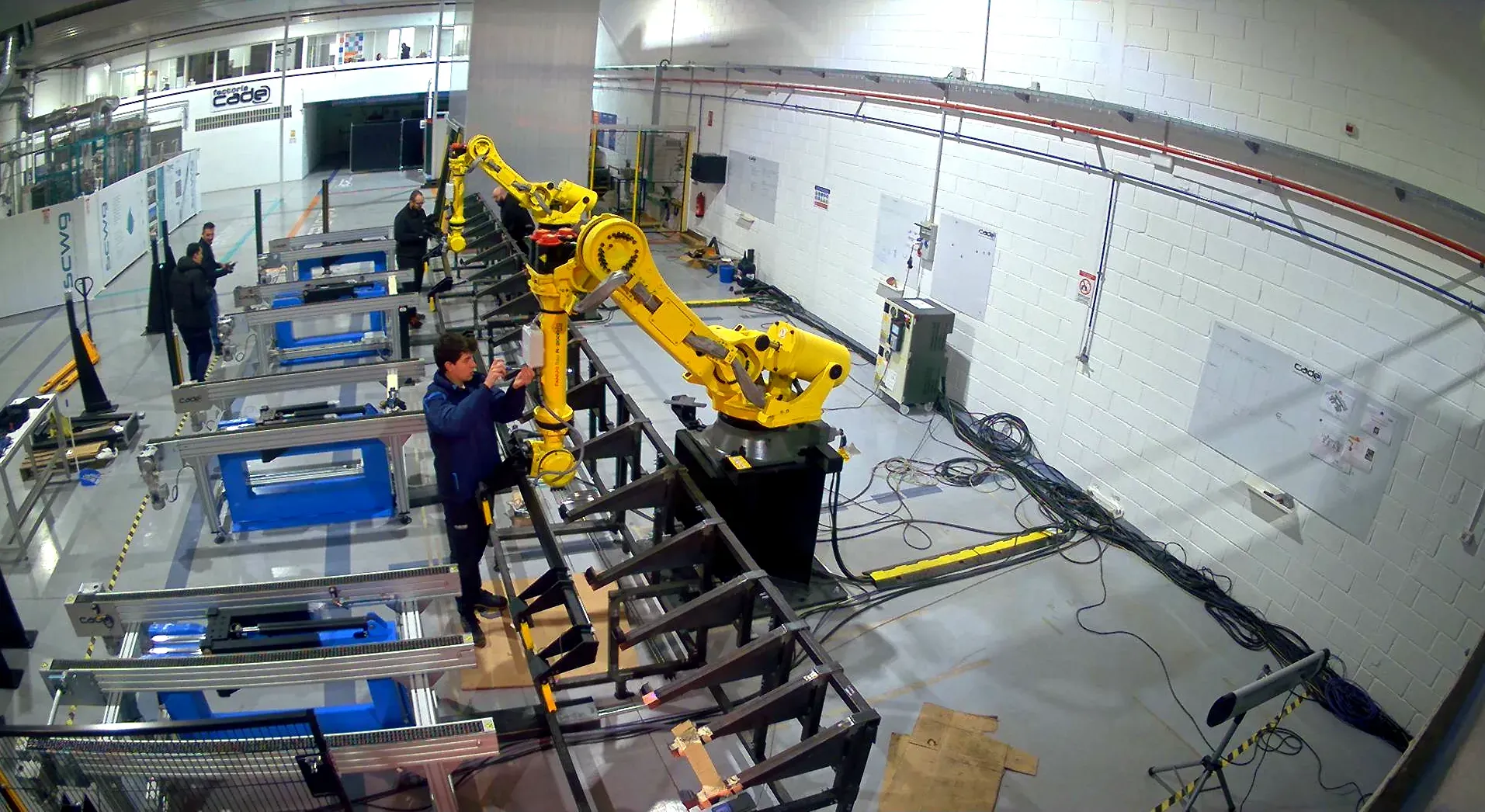
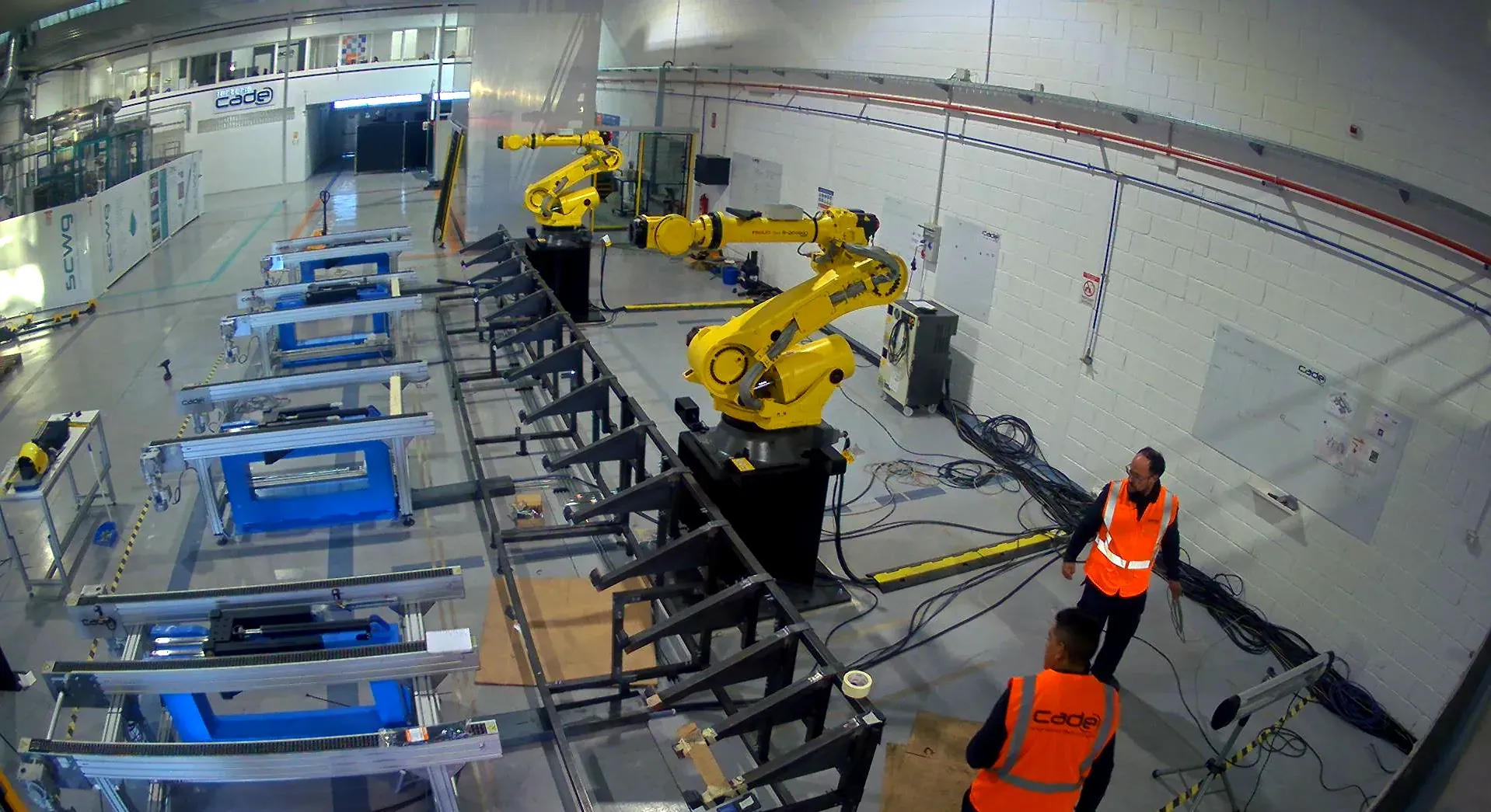
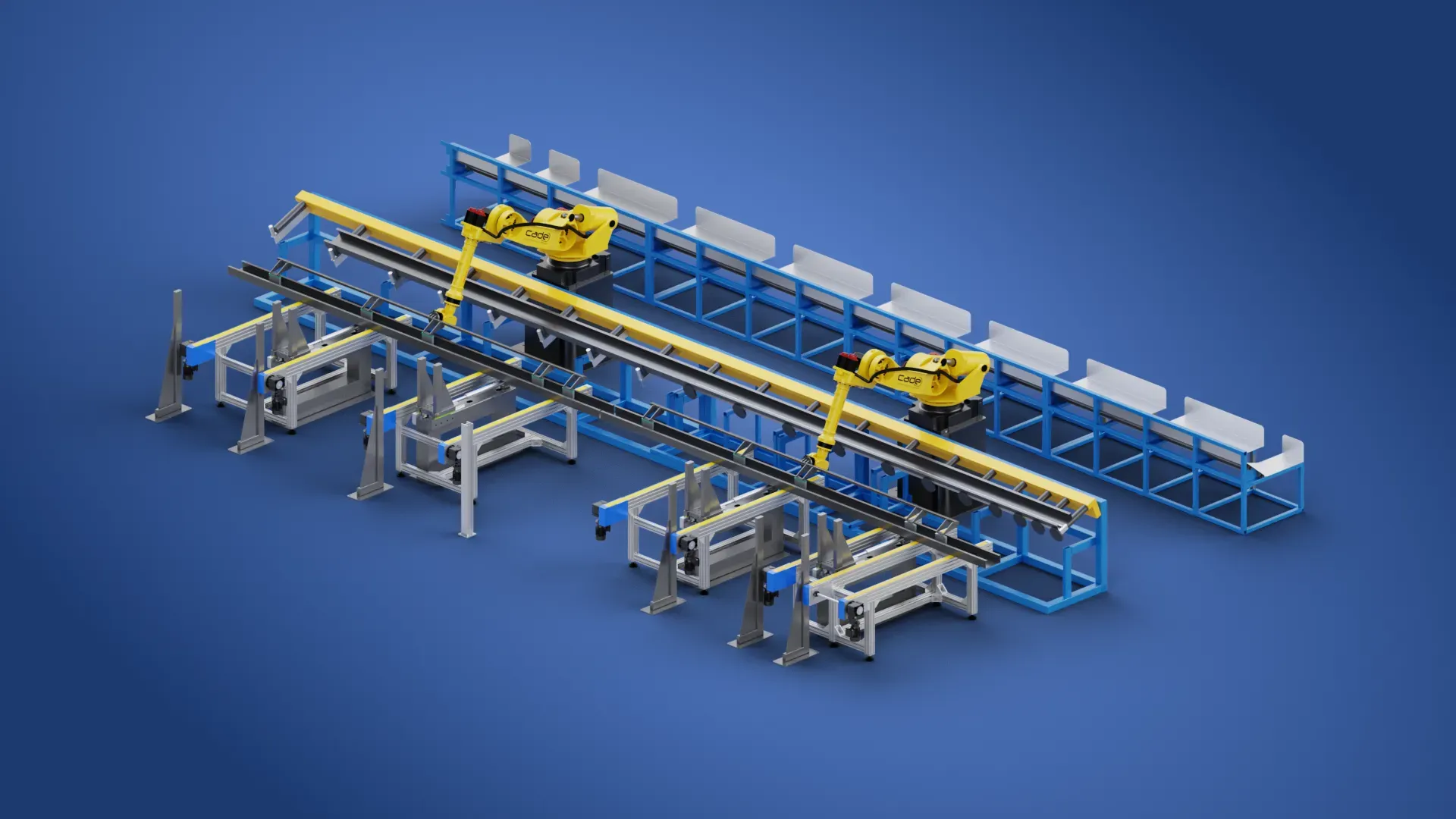
The solution was designed as an automated end-of-line stacking system that ensured correct profile alignment and preparation in the pick-up area, creating the conditions for stable and repeatable stacking. The roller outfeed and the required mechanical adaptations were developed to guarantee consistent delivery to the handling system.
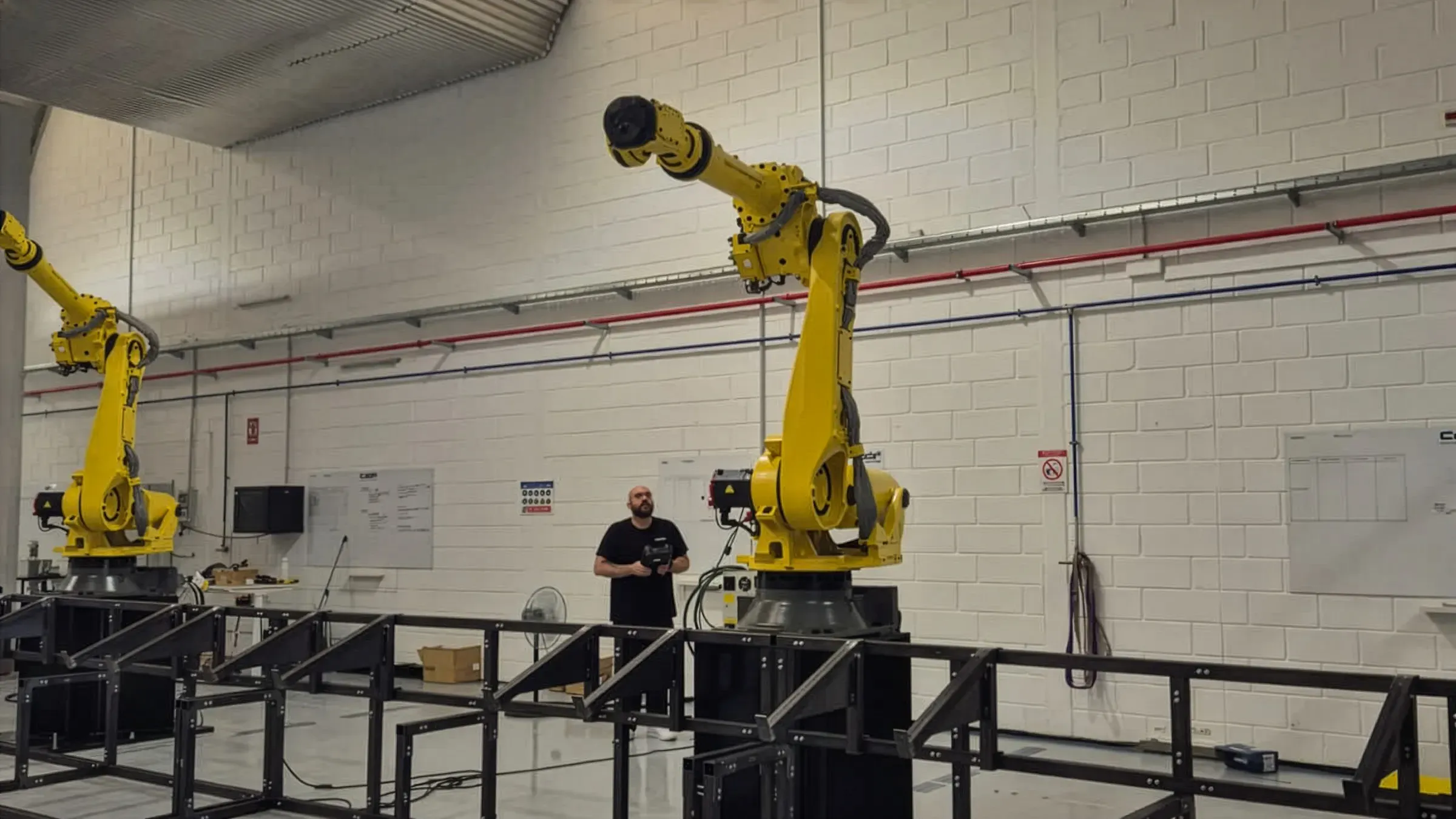
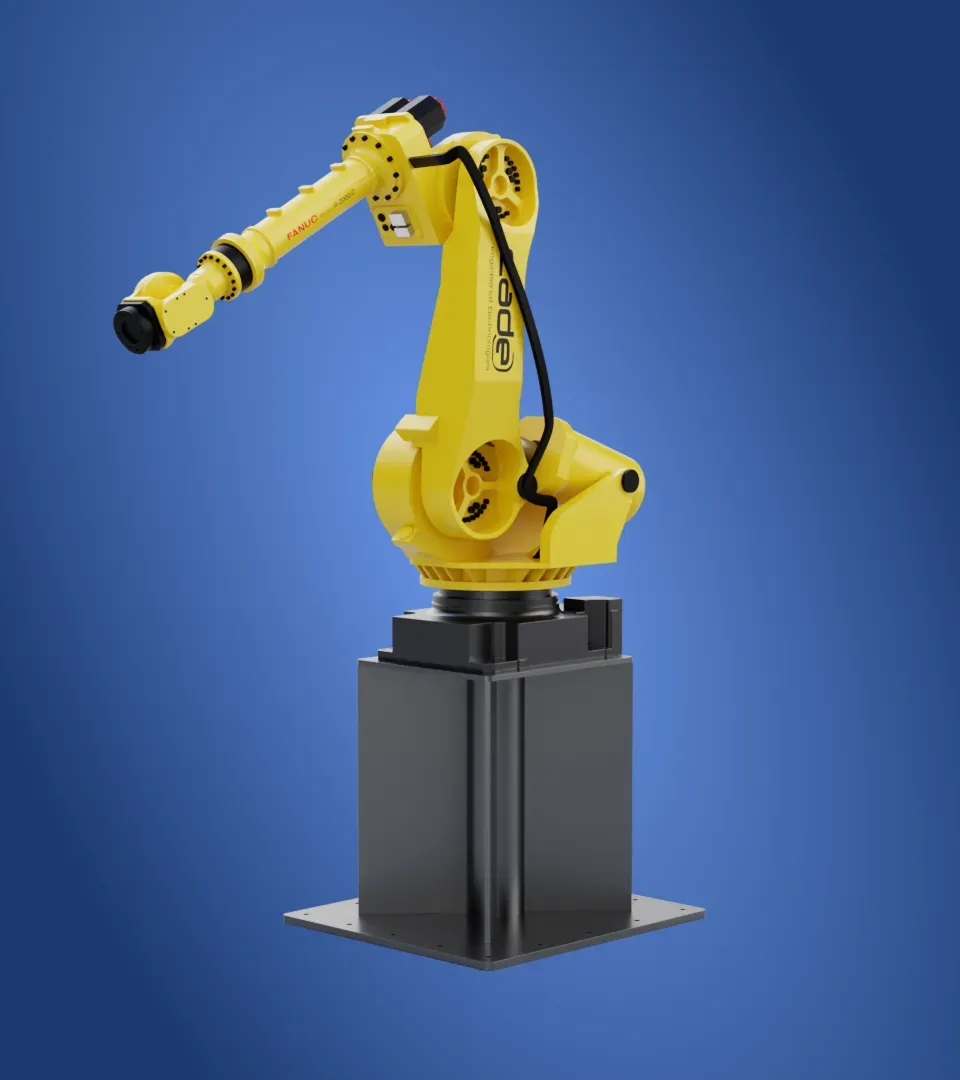
A robotic handling system with custom grippers was then integrated to select and stack the profiles according to their geometry and plant requirements. The aim was to achieve precise, continuous stacking with minimal manual intervention.
The system also included a motorised extraction and compacting station capable of forming defined bundles and managing the outfeed of multiple bundles, allowing strapping and removal operations without interrupting production. Touchscreen control and a perimeter industrial safety system completed the installation.
Particular attention was given to the coordination between profile arrival, pick-up positioning and bundle formation, so that the automated profile stacking system could operate as an integrated part of the line rather than as an isolated handling station.
CADE
Solution
Results
With the implementation of the system, the end-of-line moved towards a more stable and repeatable operating model. Profiles arrived better aligned, were picked more consistently and were stacked with improved bundle geometry, reducing incidents linked to misalignment and poorly formed bundles.
From an operational point of view, the solution made it possible to maintain production continuity while strapping and removal tasks were carried out, improving overall flow and preventing congestion at the end-of-line. Manual handling effort was also reduced, supporting better ergonomics and more stable operation across shifts.
The result was a safer, more controlled and more scalable process, supported by an automated profile stacking approach that improves product consistency, process reliability and plant responsiveness.
This improvement also creates a stronger basis for future production growth, since automated profile stacking supports higher repeatability, better bundle presentation and a more predictable end-of-line workflow over time.
Otros Proyectos

Structural Integrity Assessment During Local PWHT
Structural Integrity Assessment During Local PWHT Post weld heat treatment (PWHT) is a thermal treatment usually performed in steels that have been welded. Its object is to ensure that the welding properties are suitable for its expected operation according to
3D Point Cloud Generation to Modify Existing Systems
3D POINT CLOUD GENERATION TO MODIFY EXISTING SYSTEMS OBJECTIVE In projects for the modification or upgrading of existing industrial facilities, CADE regularly performs 3D laser scans in plants, in order
Piping Stress Analysis and Finite Element Analysis (FEA) For Creep Effect Evaluation
PIPING STRESS ANALYSIS AND FINITE ELEMENT ANALYSIS (FEA) FOR CREEP ASSESSMENT The owner of a steel plant in DURGAPUR (India) requested CADE to assess the remaining life and mechanical integrity

Fatigue Analysis Of Process Equipment Using Finite Element Method
FATIGUE ANALYSIS OF PROCESS EQUIPMENT USING FINITE ELEMENT METHOD OBJECTIVE A significant supplier of process equipment and pressure vessels requested CADE’s services to perform design validation for fatigue of a