UNEF conference: how energy storage and voltage control are transforming PV plants
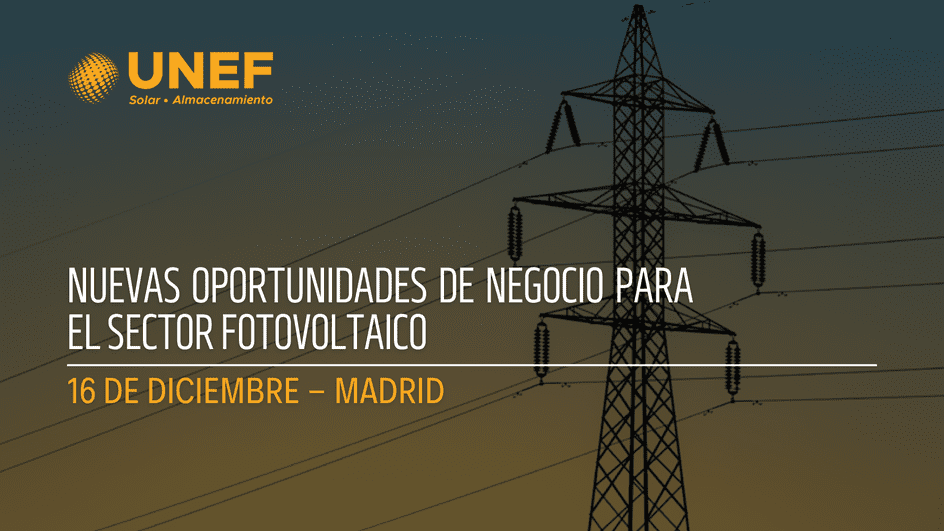
On 16 December we attended the conference organised by UNEF (the Spanish Photovoltaic Union), which focused on the role of energy storage in the operation of photovoltaic plants and its ability to provide voltage control services.
Key developments shared during the conference
The strategic role of energy storage in Spain's NECP 2030 (PNIEC)
These initiatives reinforce the role of energy storage as a strategic pillar for meeting the targets of the PNIEC 2030, Spain’s National Energy and Climate Plan, while opening up new opportunities for plants already in operation.
From generating assets to active power system infrastructure
The conclusions of the event highlighted a paradigm shift in the photovoltaic sector: plants are no longer purely generating assets but are becoming active power system infrastructure, capable of providing ancillary services essential to grid stability. In this context, hybridisation with storage is emerging not only as a technical solution, but also as a lever for competitiveness and differentiation for developers and operators.
Regulatory framework and technical adaptation of assets
UNEF also stressed that the new regulatory framework and the procedures of Red Eléctrica de España are designed to facilitate the progressive participation of renewable installations in services such as voltage control, reactive power management and operational flexibility. However, this scenario calls for a higher level of technical expertise, risk analysis and adaptation of existing assets, especially in plants that were not originally designed to provide this type of service.
Operational challenges in integrating storage and grid services
From an operational standpoint, incorporating storage and providing grid services bring new challenges in terms of design, integration, structural reliability and component service life. A sound assessment of additional loads, more demanding operating regimes and dynamic conditions becomes critical to ensuring the safety, availability and profitability of the installations over the long term.
CADE technology solutions for PV assets
At CADE, we follow these developments closely and provide specialised technology solutions to support the sector through this transition. With more than 20 years of experience, we help maximise the integrity, performance and service life of renewable assets through:
- Application of advanced engineering methodologies:
- RCA (Root Cause Analysis): identification of the root causes of failures.
- RLA (Remaining Life Assessment): estimation of the remaining life of critical components.
- CFD (Computational Fluid Dynamics): fluid dynamics simulation for thermal, structural and wind load analysis.
- Development of in-house technology, such as:
- ANEMIoT, a structural monitoring system for aeroelastic phenomena in solar trackers.
- SIMULWIND, a CFD-based virtual wind tunnel for assessing wind loads on PV structures.


 MITECO (the Spanish Ministry for the Ecological Transition) is processing more than 120 storage projects awaiting their Environmental Impact Statement (DIA).