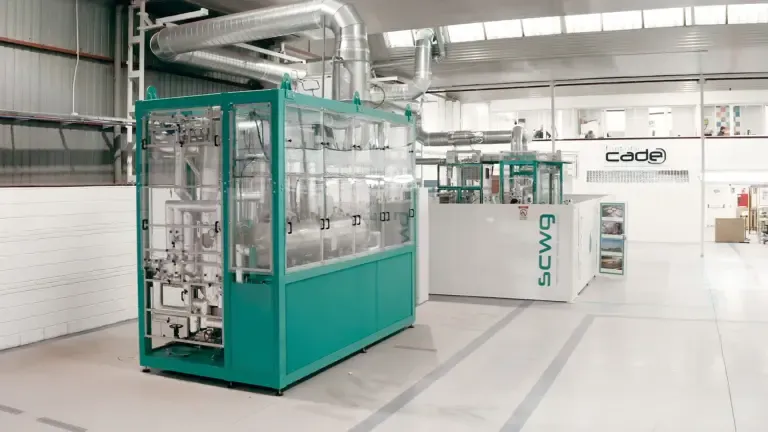

Supercritical water gasification (SCWG) is a promising technology for the efficient conversion of wet biomass (without predrying) into syngas rich in hydrogen and methane with a high calorific value.
How supercritical water gasification works
This process consists of gasifying waste biomass in aqueous environment at supercritical conditions (above 22.1 MPa and 374 °C). Such conditions allow water to acquire special thermal and physical properties (such as density, viscosity, thermal conductivity and specific heat capacity) to transform wet biomass into clean fuel gas taking into account as well that components which contaminate the gas like CO2, inorganic salts or tars, are soluble in water at supercritical conditions.
Applications: from waste biomass to energy
Due to this fact, SCWG technology is a suitable process to manage waste biomass in order to provide an energetic valuation of waste, being a source of income for the producing industry.
Although potential fields of application of SCWG technology have been already set (food, farming and ranching or waste water industries), a wide range of applications is expected for the use and/or valuation of multiple products and waste typologies with high content of carbon.
CADE’s SCWG pilot plant
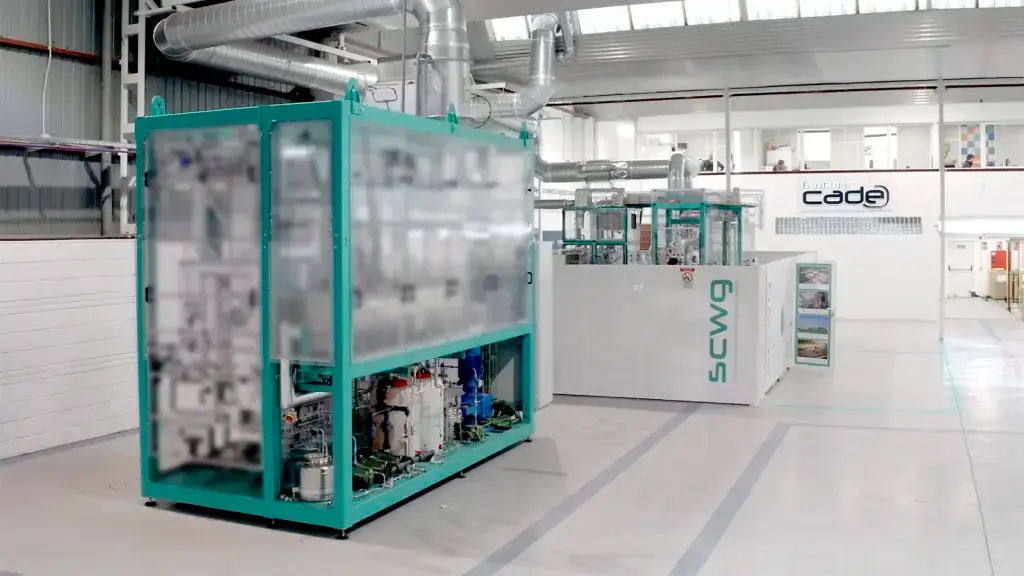
Based on the need of innovative technology-based solutions within aforementioned sectors and CADE’s knowledge of supercritical fluids technology, the company is currently developing an experimental pilot plant that will allow to validate and deepen the utilization of SCWG technology as previous step of industrial scale applications.
SCWG Project is framed within the company’s strategy led to develop innovative engineered products and technologies. This way CADE becomes a comprehensive supplier of technology and advanced engineering solutions.
CADE counts for this Project on financial support of CDTI.
This article was first published in 2013. For the current status of the technology, read CADE SCWG: turning wet waste into syngas, energy and high-value molecules.
Related CADE services: Renewable Molecules
Further information: International Energy Agency (IEA)