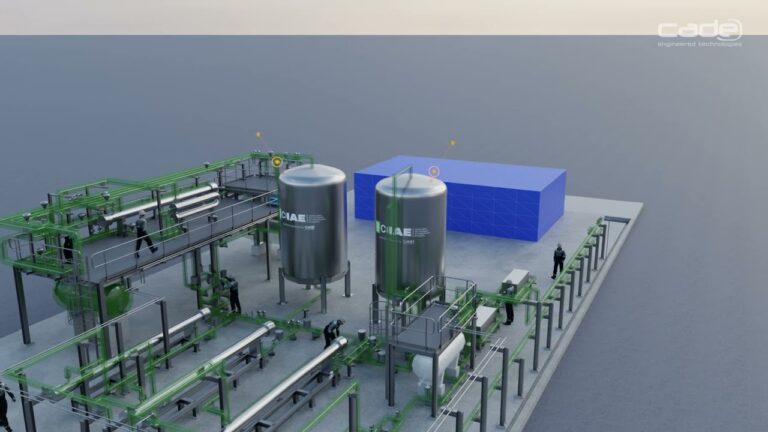

We will focus exclusively on thermal energy storage, given its growing relevance and specific applications in the efficient management of renewable energy, power grid stability and its potential widespread use in industries that require heat for their production processes.

Thermal Energy Storage
In industries whose production process requires a continuous supply of heat, a viable path to decarbonization is thermal energy storage, known as TES (Thermal Energy Storage). TES charging can follow a hybrid model combining local renewable generation with grid supply at times of low renewable output, while discharging takes place when heat is demanded and producing heat by other means is expensive. Decision-making must be based on the variables involved, both stochastic (weather, renewable output, etc.) and deterministic (stored energy and energy prices, among others).
According to the Energy Storage Strategy mentioned above, TES has great potential, even though, in general, it is not yet a mature large-scale alternative on the market. This opens up a significant niche for developing this technology as a clear vector for the full decarbonization of industries that use large amounts of heat in their production processes.
Furthermore, from a grid services perspective, and unlike other heat generation equipment that lacks this flexibility, TES systems can reduce grid congestion and provide real-time balancing. When the grid is at full capacity due to other electricity demands, the load can be disconnected. This reduces both the need for alternative, less efficient storage technologies to meet heat demand and the need to expand power grid capacity.
Thermal energy storage can be divided into three types according to the mechanism used: sensible heat storage (no phase change), latent heat storage (with phase change) and thermochemical storage. Commonly used storage materials include hot water, molten salts, packed rock beds, liquid air and thermochemical materials (LiBr/H2O or H2O/NH3 pairs), among others.
Sensible heat storage, known as TES–SHS, is the most widely used thermal storage technology in residential and industrial applications. It works by raising or lowering the temperature of a liquid or solid material with a high heat capacity in order to store and release thermal energy for low-temperature applications.
For low temperatures, up to 120 °C, water is used as an effective, very low-cost medium, usually in small, well-insulated tanks; its temperature range makes it suitable for solar thermal energy. Where larger volumes are needed, a wide variety of underground storage options are used, such as caverns and boreholes.
For high temperatures, the most common fluid is molten salt, although solid-media storage solutions are increasingly common. In these, heat is transferred directly from a gaseous medium to materials such as ceramic bricks, concrete or natural stones, such as volcanic rock and quartz, reaching temperatures above 700 °C.
Advantages of thermal storage over other storage systems.
Thermal storage offers several distinctive advantages compared with other types of energy storage, including:
Cost-effectiveness
Both in terms of the materials used and system maintenance.
Energy efficiency
In direct-conversion applications, as there are no conversion losses, as well as lower losses during storage.
Capacity and scalability
Thermal storage is particularly well suited to large-scale applications, such as solar thermal power plants, and offers great flexibility to scale according to needs.
Integration with renewable energy
It is an ideal solution for integration into solar thermal power plants, while also decoupling generation from consumption.
Low environmental impact
It uses less toxic materials such as water, mineral salts or solid aggregates. This also makes the materials easier to recycle, reducing long-term environmental impact.
Reliability and durability
Materials degrade less over time and the system is less prone to failure, as it is a much more robust solution, making it suitable for critical applications and extreme environments.
In short, thermal storage offers a number of significant advantages in terms of cost, efficiency, capacity, integration with renewable energy, environmental impact and durability, making it an attractive and sustainable option for a wide range of energy applications.
Advantages of Thermal Storage for Grid Stability
In addition to the competitive advantages listed above, thermal storage offers a further set of benefits for power grid stability, although these are not exclusive to this storage system.
Although they have already been briefly mentioned, they are detailed below:
Mitigating Intermittency
It makes it possible to store surplus energy generated at times of high output and release it when generation is low, balancing energy supply and demand.
Peak Demand Reduction
At times when the grid may be overloaded, thermal storage can release stored energy, avoiding the need to call on backup power plants, which tend to be more polluting and more expensive.
Improved Energy Efficiency
By enabling more efficient use of the energy generated, it reduces the energy losses associated with generation and transmission.
Frequency and Voltage Stability
The controlled release of stored energy helps maintain grid frequency and voltage stability, both critical for the safe and reliable operation of the power system.
Grid Decongestion
In areas with a high share of renewable energy, thermal storage can relieve grid congestion, enabling a more balanced and efficient distribution of energy.