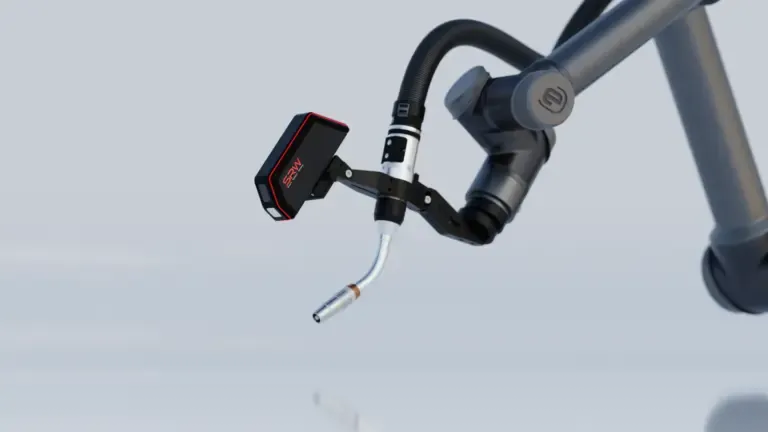

What intelligent robotic welding is and how it differs from conventional automation
Intelligent robotic welding is an evolution of traditional welding automation. It does not simply reproduce a programmed path: it uses 3D vision, seam tracking and adaptive control to interpret the actual geometry of the part and adjust the operation during the process.
This difference is particularly relevant in fabrication where the actual parts do not exactly match the CAD model. Dimensional tolerances, fit-up deviations, ovality or thermal distortion can change the position and geometry of the joint.
When the system merely repeats predefined coordinates, any variation can carry through to the weld bead. When the system detects and interprets those variations, the path can be corrected before and during execution.
What we mean by intelligent robotic welding
A conventional automated welding system typically combines an industrial robot, a power source, a torch, fixtures and path programming. Its main strength is repeatability: it consistently executes a predefined motion as long as fabrication conditions stay within the expected margins.
Intelligent robotic welding adds a layer of perception and adaptation. The system does not work solely with the theoretical position of the joint, but with information obtained from the actual part. Using that information, it can locate the joint, interpret its three-dimensional path and adjust the working position to keep tracking it.
The intelligence, therefore, does not lie in the robot arm alone. It comes from the integration of:
- industrial robotics;
- machine vision and sensing;
- welding process know-how;
- seam tracking;
- path planning;
- adaptive control.
The result is a system capable of responding to actual fabrication conditions, within the limits previously defined and validated for each application.
Why a fixed path may not be enough
In an ideal environment, all parts have the same dimensions, arrive perfectly positioned and keep their geometry during welding. In industrial production, however, variations appear that can affect the result:
- fabrication and cutting tolerances;
- gaps or misalignment in joint preparation;
- variations in positioning within the fixture;
- ovality in circular components;
- accumulated deviations in long assemblies;
- distortion caused by heat input;
- differences between batches, materials or subassemblies.
A welding robot programmed with fixed points and paths will repeat the motion accurately, but it will not necessarily follow the joint if the joint has shifted.
The robot’s repeatability does not eliminate the variability of the part.
This is a fundamental distinction: repeating a path correctly is not the same as controlling a weld correctly. For automation to be robust, the system must know where the joint actually is and how it runs along its length.
How intelligent robotic welding works
Although the specific architecture depends on the application, the operation of an intelligent robotic welding solution can be explained in five main stages.
1. Joint detection
3D vision captures geometric information from the work area. The aim is to identify the actual position, orientation and path of the joint, instead of assuming that it exactly matches the nominal coordinates.
Detection must be designed for the material type, geometry, surface finish, accessibility and environmental conditions of the application.
2. Interpretation of the actual geometry
The captured data are processed to reconstruct the information needed to perform the operation.
This stage makes it possible to recognize deviations, changes in orientation and geometric variations relevant to the torch path. The system thus moves from working with a purely theoretical reference to using an updated representation of the fabricated part.
3. Path generation or correction
Based on the detected geometry, the system adapts the robot’s motion.
The path no longer depends solely on rigid programming and is adjusted to the actual position of the joint. This correction must remain within the defined ranges to ensure process stability and prevent unintended movements.
4. Tracking and adaptive control
During execution, the system keeps tracking the joint and applies the corrections set out in the control strategy.
The aim is to maintain a consistent working position along the weld bead, even when small variations from the theoretical model occur.
Depending on the process, the integration and the technical validation, the control can act on variables such as:
- torch position;
- orientation and work angle;
- standoff distance from the part;
- travel speed;
- welding process parameters.
5. Operation logging
Digitalization makes it easier to store information on paths, parameters and execution.
The scope of this traceability must be defined for each integration, but it can provide a useful basis to:
- monitor the process;
- compare runs;
- standardize production;
- analyze deviations;
- progressively improve the operation.
What 3D vision and adaptive control bring
3D vision allows the system to work with the fabricated part, not just with its digital representation.
This is especially valuable in three-dimensional joints, curved geometries, circumferential welds, branch connections or assemblies where tolerances accumulate during fit-up.
Adaptive control uses that information to modify the system’s response within the limits defined for the application. In this way, intelligent robotic welding can compensate for certain geometric deviations without relying solely on a fixed path.
This capability does not remove the need for:
- proper joint preparation;
- correctly designed fixtures;
- qualified welding procedures;
- validated process parameters;
- defined acceptance criteria;
- safety measures for the robotic cell.
The role of the adaptive system is to increase responsiveness to the actual variability of the process, not to replace the fundamentals of welding engineering.
The integration must also take into account the safety requirements applicable to industrial robot applications and robot cells.
Conventional automated welding vs. adaptive welding
| Criterion | Conventional automation | Intelligent robotic welding |
|---|---|---|
| Working reference | Programmed coordinates and path | Actual geometry detected on the part |
| Response to deviations | Limited when the joint shifts | Correction based on the captured information |
| Allowable variability | Requires high repeatability of the part and fixture | Can compensate for variations within the validated range |
| Programming | Mainly based on points and motions | Combines programming, perception and adaptation |
| Ideal application | Stable series and repetitive geometries | Processes with variability or complex geometries |
| Seam tracking | Not always included | Built into the control strategy |
| Process control | Repetition of parameters and motions | Tracking and adjustment during operation |
| Preparation | Highly dependent on initial positioning | Greater ability to respond to small deviations |
The choice should not be framed as an automatic replacement for every conventional cell.
When parts are highly repetitive, the fixture properly controls the position and the path is simple, a programmed solution may be sufficient. Adaptive welding becomes more valuable when geometric variability affects quality, preparation time or production stability.
Industrial applications of intelligent robotic welding
The technology can be assessed in processes that combine repetitive welds with actual geometries that are difficult to keep within a fixed path.
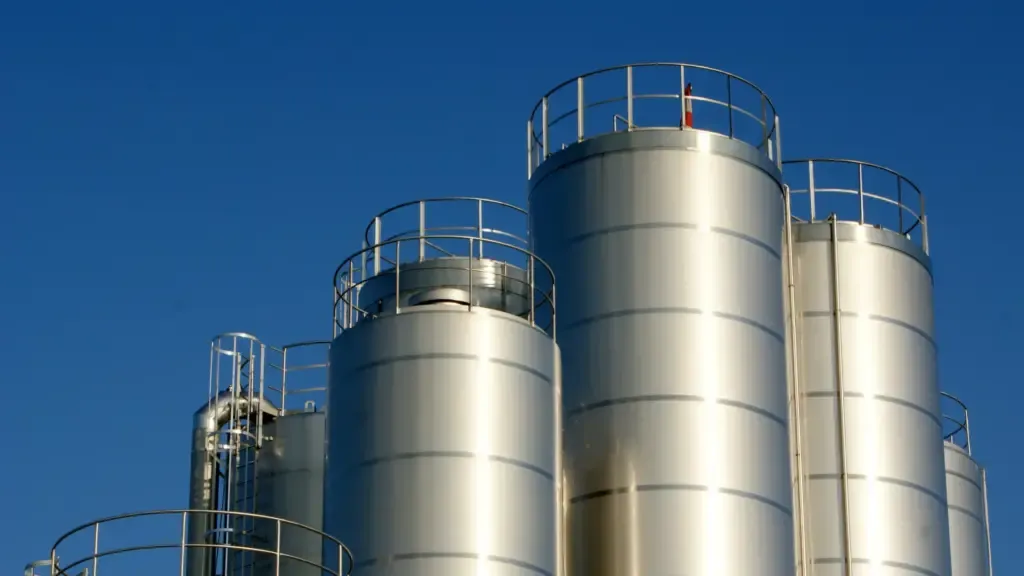
Equipment and plate work
Vessels, tanks, tankers, hoppers, silos, casings, headers and subassemblies can include longitudinal, circumferential or three-dimensional welds.
In these applications, the geometry of the assembly, fit-up tolerances and thermal distortion can shift the joint from its nominal position.
Detecting the joint makes it possible to adapt the motion to the assembled geometry and maintain a more stable path along the weld bead.
Read more: Equipment and plate work at Smart Robotic Welding
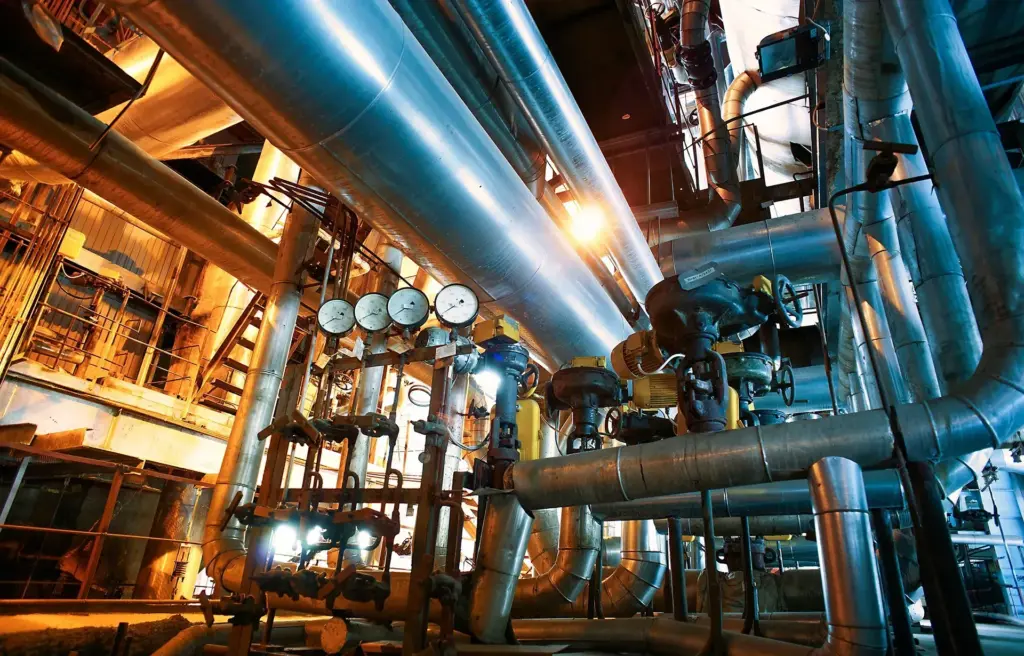
Pipes and ducts
Linear, orbital and curved joints, branch connections and bifurcations require the torch orientation to be maintained along paths that are not always identical from part to part.
Joint detection and three-dimensional tracking make it possible to handle these variations with a more flexible strategy than programming based solely on nominal coordinates.
Read more: Pipes and ducts at Smart Robotic Welding
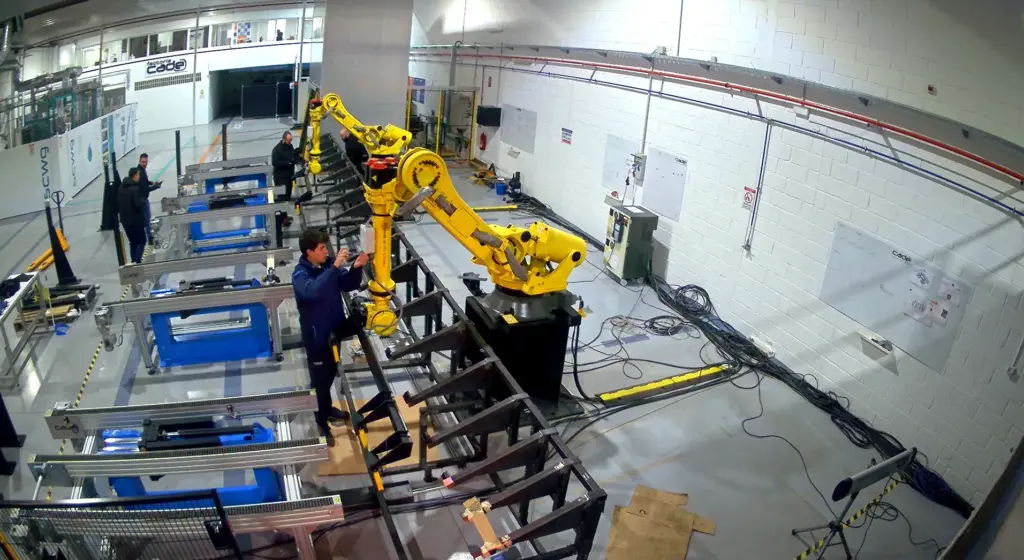
Steel structures and subassemblies
Frames, supports, panels, compact modules and structures made up of multiple components can accumulate deviations from cutting, positioning and tack welding.
Intelligent robotic welding makes it possible to use the assembled geometry as the reference, not just the nominal model.
Read more: Steel structures at Smart Robotic Welding
When it is worth assessing an adaptive solution
A company should consider this approach when it identifies one or more of the following situations:
- it is difficult to keep the joint within a fixed path;
- manual preparation and readjustment take up a significant part of the cycle time;
- quality varies between theoretically identical parts;
- curved or three-dimensional geometries require complex programming;
- welds need to be automated in areas with limited access;
- the availability of qualified welders limits production capacity;
- the goal is to increase repeatability and traceability;
- conventional automation does not adequately absorb the actual tolerances.
The analysis should not start with robot selection. It should start with the part, the joint, the welding process, the existing deviations and the quality criterion to be maintained.
Only then can the right combination be defined of:
- sensing and vision;
- robot and positioners;
- power source and welding process;
- fixtures;
- control strategy;
- safety systems;
- integration with the production line.
What Smart Robotic Welding brings
Smart Robotic Welding integrates robotics, machine vision and adaptive control to recognize the joint, interpret the actual geometry and adjust the operation.
Its approach focuses on taking automation beyond the repetition of a fixed path.
Its capabilities include:
- autonomous operation of the welding system;
- real-time adaptation to the 3D joint;
- tracking of the actual part geometry;
- adaptability to different welding processes;
- improved stability and repeatability;
- fewer manual operations in confined spaces;
- digitalization and greater process control.
It is not about adding a robot in isolation, but about integrating a solution that fits the production process.
Defining the case requires studying the geometry, tolerances, preparation, sequence, accessibility, parameters, quality requirements and the relationship with the rest of the line.
Related CADE services: CADE SRW: intelligent robotic welding · Welding engineering · Smart Factories
Further information: American Welding Society (AWS)
You may also be interested in: CADE SRW intelligent robotic welding · Smart Factories